Blog
Raw vs. Roasted Pistachios: Nutritional Differences
When it comes to healthy, nutrient-dense snacks, pistachios consistently rank at the top. Renowned for their vibrant green color, rich flavor, and exceptional health profile, these nuts are a staple for health enthusiasts and culinary professionals alike. However, a common dilemma arises when choosing between raw and roasted varieties.
Does roasting diminish the health benefits of this beloved nut? In this article, we will break down the nutritional differences between raw and roasted pistachios, explore how processing affects their chemical composition, and guide you on making the best choice for your diet or business needs.
The Nutritional Profile of Raw Pistachios
Raw pistachios are harvested, shelled (or left in-shell), and dried without the application of high heat or oil. This preserves the nut in its most natural state.
Raw Iranian pistachio varieties are celebrated globally for their rich oil content and robust nutrient density. In their raw form, these nuts are an excellent source of:
- Healthy Fats: Primarily monounsaturated and polyunsaturated fatty acids, which support cardiovascular health.
- Proteins and Amino Acids: Essential building blocks for muscle repair and metabolic function.
- Antioxidants: Rich in lutein, zeaxanthin, and polyphenols, which protect cells from oxidative stress.
- Vitamins and Minerals: High levels of Vitamin B6, thiamine, copper, manganese, and potassium.
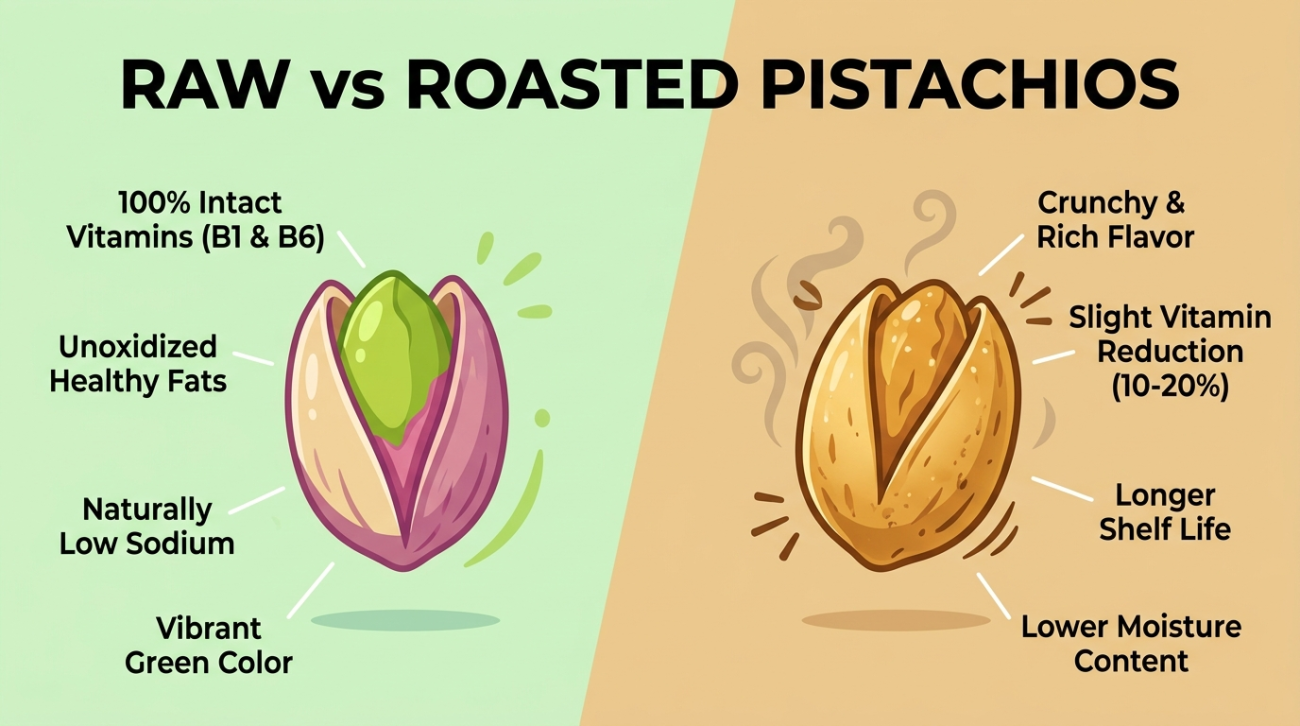
Because raw nuts do not undergo thermal processing, delicate heat-sensitive vitamins (like Vitamin B1 and Vitamin C) and active antioxidants remain completely intact. If you are looking to explore the natural health properties of these nuts, you can read more about Pistachio’s health benefits in our detailed guide.
How Roasting Affects Pistachios: The Science Behind the Heat
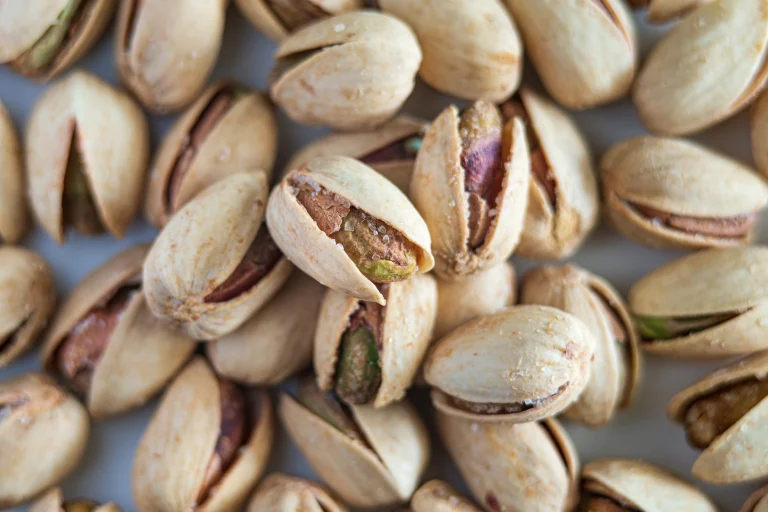
Roasting is a common food processing method that uses dry heat to cook the nuts evenly. This process is primarily done to enhance aroma, flavor, and create a crunchy texture. The roasting process can be categorized into dry roasting (no added oil) and oil roasting.
During roasting, several physical and chemical changes occur:
1. Water Loss and Nutrient Concentration
As pistachios roast, they lose moisture. This makes the roasted nut slightly lighter and denser in nutrients per gram compared to raw ones. However, the overall macronutrient profile (grams of protein, fat, and carbs) remains relatively stable.
2. Impact on Healthy Fats
Pistachios are packed with healthy unsaturated fats. While these fats are highly beneficial, they are also sensitive to heat and oxidation. High roasting temperatures can oxidize these delicate lipids, leading to the formation of free radicals. This is why premium brands like Pinut pistachio utilize controlled, low-temperature roasting techniques to preserve lipid integrity.
3. Degradation of Heat-Sensitive Vitamins
While minerals like iron, potassium, and copper are unaffected by heat, certain vitamins are thermolabile. Roasting reduces the concentration of:
- Vitamin B6 (essential for metabolism and brain health)
- Thiamine (Vitamin B1)
Active Antioxidants (some polyphenols degrade under prolonged heat)
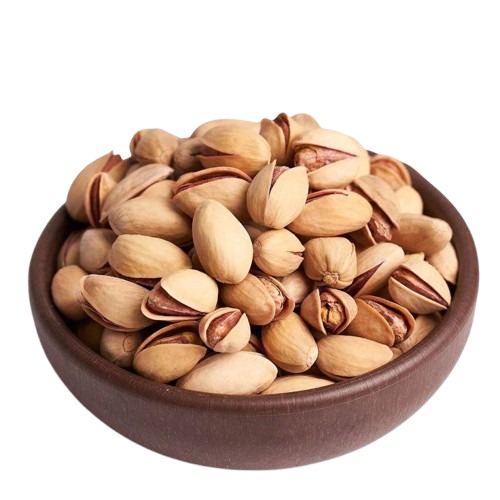
Raw vs. Roasted: A Side-by-Side Comparison
| Feature / Nutrient | Raw Pistachios | Roasted Pistachios |
| Texture & Flavor | Mild, sweet, slightly chewy | Crunchy, rich, nutty (Maillard reaction) |
| Healthy Fats | Intact, zero thermal oxidation | Risk of slight oxidation if over-roasted |
| Vitamin B1 & B6 | High (100% preserved) | Moderately reduced (10–20% loss) |
| Antioxidant Levels | Maximum capacity | Slightly lower |
| Sodium Content | Naturally very low | Can be high if salted during roasting |
| Shelf Life | Shorter (higher moisture content) | Longer (if stored correctly in dry conditions) |
For individuals monitoring their weight, both options have unique advantages. Raw pistachios offer uncompromised nutrients, while roasted pistachios are often perceived as more filling due to their crunch. To learn more about incorporating them into a weight-loss regime, check out our analysis: Are Pistachios Good for Weight Loss? Benefits of Iranian Pistachios.
Choosing the Right Form: From Raw Kernels to Exporting
The choice between raw and roasted also depends on the final application. For food manufacturers, bakers, and bulk buyers, the raw pistachio kernel is often the preferred choice. Raw kernels are highly versatile; they can be blended into a premium pistachio paste for confectionery or roasted later to control flavor profiles.
For global trade, understanding the destination market’s preferences is key to a successful pistachio export strategy. European markets often demand raw, high-grade kernels with strict aflatoxin controls, while Middle Eastern and Asian markets show a high preference for roasted, salted, in-shell options like Iranian Jumbo Pistachio (Kalleh Ghouchi) or the famous Iranian Round (Fandoghi) Pistachio.
If you are exploring the varieties available for commercial use, you can compare different options like Fandoghi vs Kaleh Ghouchi Pistachio or examine the differences in long varieties through the Akbari Vs. Ahmad Aghaei Pistachio comparison.
Conclusion
Both raw and roasted pistachios offer incredible health benefits, making them a powerhouse snack.
- Choose raw pistachios if you want the absolute maximum amount of vitamins and unoxidized healthy fats in their purest form.
- Choose dry-roasted (unsalted) pistachios if flavor, crunch, and shelf-life are your primary priorities.
At Pinut, we specialize in sourcing and processing the finest Iran’s Pistachio crops. We offer premium raw kernels and custom roasting options tailored to international quality standards. To find out how we can support your business, visit our About Pinut page or explore our customized solutions like Pinut Private Labeling. Ready to make an order? Head over to our Products page or Contact us directly to discuss your requirements.
