Blog
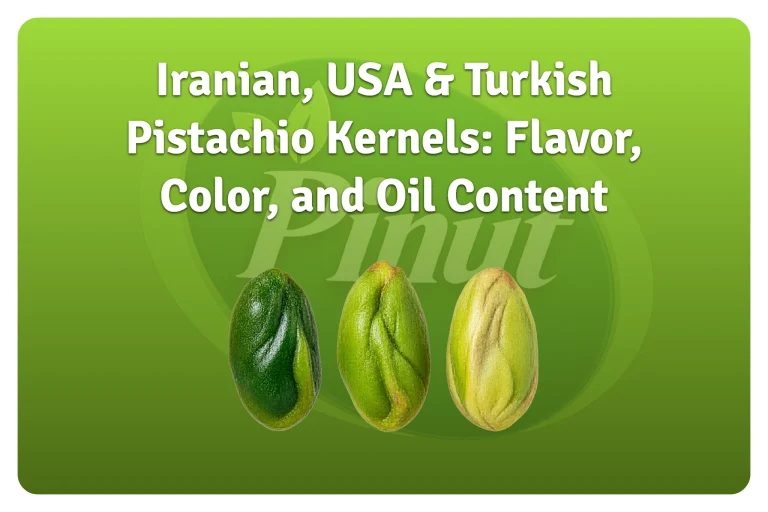
Iranian, USA & Turkish Pistachio Kernels: Flavor, Color, and Oil Content
Key Takeaways
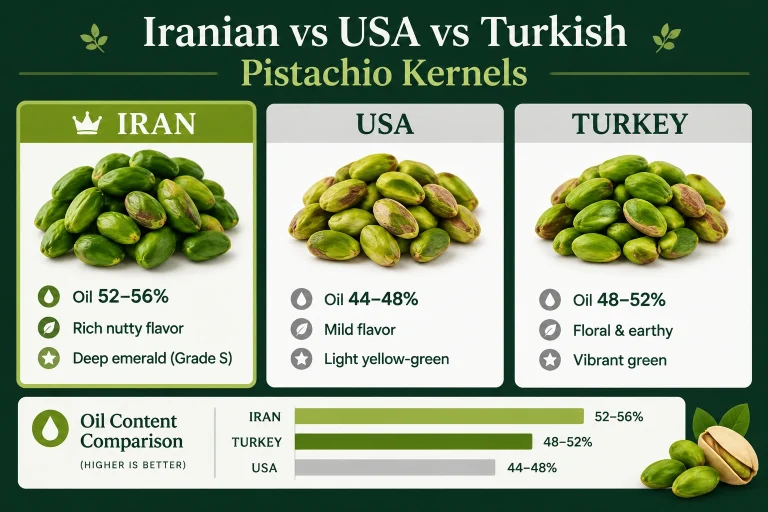
- Flavor Profile: The Iranian pistachio kernel delivers the richest, most intense nutty taste with natural sweetness due to higher unsaturated fat concentrations. The Turkish pistachio kernel (Antep) provides an earthy, slightly sweet flavor with herbal undertones, while the USA pistachio kernel features a milder, uniform, and neutral crunch.
- Oil Content: Iranian kernels lead the global market with 52%–56% healthy oil content, enabling superior roasting tolerance at higher temperatures without burning. Turkish varieties average 48%–52%, while California (USA) kernels measure around 44%–48%.
- Color Depth: For deep emerald-green color grading, green peeled pistachio kernel (GPPK) grades from Iran (Graded S, A, B, C) set the benchmark for luxury confectionery and gelato. Turkish kernels are naturally vibrant green inside, while US kernels lean towards lighter yellow-green hues.
- Best B2B Applications: Iranian kernels dominate premium roasting, pastry, and confectionery; Turkish kernels excel in baklava and traditional sweets; USA kernels serve high-volume snacking and automated food processing lines.
The Global Pistachio Kernel Landscape
The global demand for high-grade nut ingredients has placed the pistachio kernel at the center of international food processing, culinary arts, and premium retail packaging. Whether sourcing for artisan confectionery, gourmet baking, or plant-based formulations like smooth pistachio paste, identifying the right origin makes a measurable difference in yield, flavor longevity, and visual appeal.
While Iran, the United States, and Turkey dominate global pistachio supply, their agricultural conditions, harvest timing, and genetic cultivars produce noticeably distinct kernels.
This comprehensive guide breaks down the chemical composition, sensory attributes, technical specifications, and industrial grading of Iranian pistachio kernel varieties compared directly against USA pistachio kernel and Turkish pistachio kernel selections.
What Is a Pistachio Kernel? (Botanical & Technical Definition)
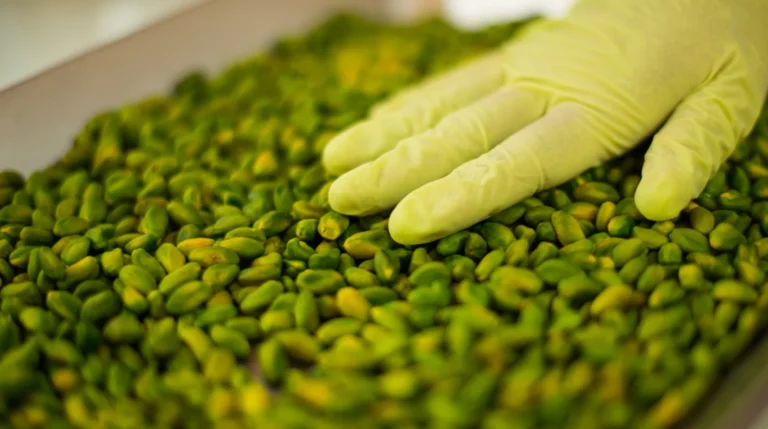
A pistachio kernel (botanically known as the seed of Pistacia vera and commercially recognized as the kernel of pistachio or kernel pista) is the nutrient-dense edible meat found inside the hard outer shell.
In-Shell
Kernel
Kernel (GPPK)
When wholesale buyers evaluate raw kernels, two technical baseline metrics are critical:
Pistachio Kernel vs Shell Weight Ratio
standard commercial crops, the ratio of in-shell weight to raw kernel yield breaks down as:
- Shell Weight: of total raw in-shell weight.
- Kernel Weight: of total raw in-shell weight.
For every of raw in-shell pistachios, commercial processing yields approximately to of cleaned kernels, depending on the cultivar. Cultivars like Iranian round pistachio (Fandoghi) and Jumbo Kalleh-Ghouchi deliver exceptionally favorable kernel-to-shell recovery rates.
Pistachio Kernel HS Code (Customs Classification)
For international trade, customs documentation, and logistics:
- Shelled Pistachios (Kernels): HS Code 0802.52 (Pistachios, fresh or dried, shelled).
- In-Shell Pistachios: HS Code 0802.51 (Pistachios, fresh or dried, in-shell).
In-Depth Comparison: Iranian vs. USA vs. Turkish Pistachio Kernels
Global Pistachio Cultivar & Origin Matrix
| Origin | Primary Cultivars | Oil Content | Dominant Color | Primary Use |
|---|---|---|---|---|
| IRAN | Fandoghi, Ahmad Aghaei, Akbari, Kalleh-Ghouchi |
52% – 56% |
Vivid Emerald to Dark Green
|
Premium Roasting, Pastry & Confectionery, High-Grade GPPK |
| TURKEY | Uzun, Kırmızı, Siirt (Antep types) |
48% – 52% |
Vibrant Green to Pale Olive
|
Baklava, Turkish Delights, Artisanal Chocolates |
| USA | Kerman, Golden Hills, Lost Hills |
44% – 48% |
Light Green / Yellow-Green
|
Mass Snacking, Breakfast Cereals, Industrial Lines |
A. Flavor Profile & Roasting Performance
The sensory profile of a pistachio is primarily governed by its unsaturated fatty acids, altitude, climate, and soil salinity.
1. Iranian Pistachio Kernel
Thanks to desert terroir characterized by high daytime temperatures, cold nights, and mineral-rich soils, the Iranian pistachio kernel has an unmatched depth of flavor.
- Taste Profile: Distinctive nutty sweetness with buttery, caramelized notes.
- Thermal Roasting Advantage: Because of its elevated natural oil profile, Iranian kernels can be roasted at high temperatures (up to ) without charring or losing their aromatic oils. This unlocks complex taste compounds that lower-fat kernels cannot replicate. Learn more about optimal preparation in our analysis of raw vs roasted pistachios.
2. Turkish Pistachio Kernel (Antep)
Grown primarily in Gaziantep and southeastern Anatolia, Turkish varieties are smaller and elongated.
- Taste Profile: Intensely fragrant, earthy, and mildly sweet with a distinctive floral tone.
- Roasting Advantage: Ideal for medium-temperature roasting. Turkish kernels retain their crisp bite when baked directly into high-moisture syrup pastries like authentic baklava.
3. USA Pistachio Kernel (California)
Under heavily mechanized, drip-irrigated conditions in California’s Central Valley.
- Taste Profile: Clean, mild, and neutral.
- Roasting Advantage: Roasted at lower temperatures. The flavor is uniform across standard batches, making it a dependable ingredient for mass-market breakfast cereals and commercial nut mixes.
B. Pistachio Kernel Color & Chlorophyll Density
Color grade directly influences the commercial market value of shelled pistachios, especially in culinary garnishing, chocolate manufacturing, and premium gelato production.
Pistachio Kernel Color Spectrum:
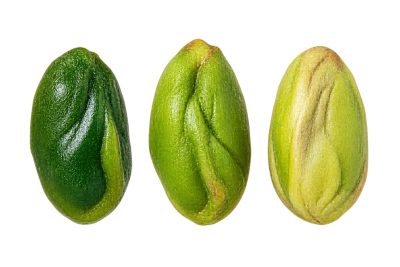
GPPK Color Classification Hierarchy
Graded in descending order by chlorophyll density & emerald intensity
- Iranian Green Pistachio Kernels: Iran is the global epicenter for green pistachio kernels, harvested early (early picked or Kaal) while the fruit is still immature to lock in maximum chlorophyll before sunlight converts the interior to yellow.The resulting green peeled pistachio kernel (blanched to remove the outer pink/purple skin) is categorized into internationally recognized luxury grades:
- Grade S: Intense deep emerald green ( dark green).
- Grade A: Vivid green ( green).
- Grade B: Bright medium green ( green).
- Grade C / D: Yellowish-green blend for pastes and fillings.
- Turkish Pistachio Kernels: Naturally high in chlorophyll with an appealing green hue, particularly the early-harvested Boz kernel used across the Mediterranean pastry sector.
- USA Pistachio Kernels: Typically harvested when fully ripe for maximum in-shell split yield. As a result, the interior meat tends toward light yellow-green with purple-edged exterior skins.
C. Oil Content & Fatty Acid Composition
Oil content determines mouthfeel, roasting tolerance, shelf life, and extraction efficiency for pastes and nut butters:
Total Lipids Content by Origin
- Iranian Kernels (52%-56% Oil): Dominated by oleic and linoleic unsaturated fatty acids. This high oil density provides a silky texture, higher caloric satiety, and superior cardiovascular benefits. Explore these mechanisms in our guide on pistachio health benefits.
- Turkish Kernels (48%-52% Oil): Dense, concentrated cellular structure with moderate oil retention.
- USA Kernels (44%-48% Oil): Lower lipid fraction with higher starch content, resulting in a drier crunch and lighter mouthfeel.
D. Pistachio Kernel Size & Cultivar Morphology
Size grading for kernels is measured either by millimeter diameter or count per ounce/100 grams.
- Iranian Varieties: Offer the widest morphological diversity in the world:
- Super Long & Long: Represented by Iranian long pistachio cultivars such as Akbari and Ahmad Aghaei (read our full Akbari vs Ahmad Aghaei breakdown).
- Round & Large Round: Represented by Fandoghi and Jumbo Kalleh-Ghouchi (compare characteristics in round vs jumbo pistachio).
- Kernel Sizing: Ranges from large whole kernels ( length) down to halved and diced splits for food processing.
- Turkish Varieties: Generally smaller and slender ( length), with pointed ends.
USA Varieties (Kerman/Golden Hills): Medium to large, rounded-oval kernels with consistent size distribution designed for high-speed robotic packing.
Comprehensive Comparison Table
| Attribute | Iranian Kernel | USA Kernel | Turkish Kernel |
|---|---|---|---|
| Natural Oil Content | 52%-56% (Highest) | 44%-48% (Moderate) | 48%-52% (High) |
| Flavor Profile | Rich, nutty, sweet, roasted aroma | Mild, clean, subtle crunch | Fragrant, floral, earthy, sweet |
| Chlorophyll / Color | Deep emerald (GPPK Grade S-C) | Light green to yellow-green | Vibrant green (Boz harvest) |
| Cultivar Diversity | Akbari, Ahmad Aghaei, Fandoghi, Kalleh-Ghouchi | Kerman, Golden Hills, Lost Hills | Uzun, Kırmızı, Halebi, Siirt |
| High-Temp Roasting | Outstanding (up to 180°C) | Sensitive to high temps | Good thermal stability |
| HS Code | 0802.52 | 0802.52 | 0802.52 |
| Common B2B Usage | Premium confectionery, GPPK, gelato, paste | Retail snack packs, cereals, bars | Traditional baklava, halva, chocolate |
To explore raw material options across all cultivars, browse our full catalog of pistachio types and bulk products.
Conclusion
Choosing between Iranian, American, and Turkish pistachio kernels comes down to your production requirements and consumer market:
- If your application requires rich, full-bodied nutty flavor, maximum roasting endurance, and luxury emerald color grades, the Iranian pistachio kernel remains the premier global choice.
- If you require smaller, herbal-sweet kernels tailored for traditional sweets and baklava, the Turkish pistachio kernel is uniquely specialized.
- If your priority is high-volume agricultural consistency and standardized processing for mainstream snack packs, the USA pistachio kernel offers a reliable industrial supply chain.
At Pinut, we supply certified bulk exports of premium Iranian pistachios, green peeled grades, and custom ingredient cuts. Explore our commercial services and bespoke private labeling solutions, or contact our export team for lot specifications, COA certificates, and competitive pricing.
