Blog
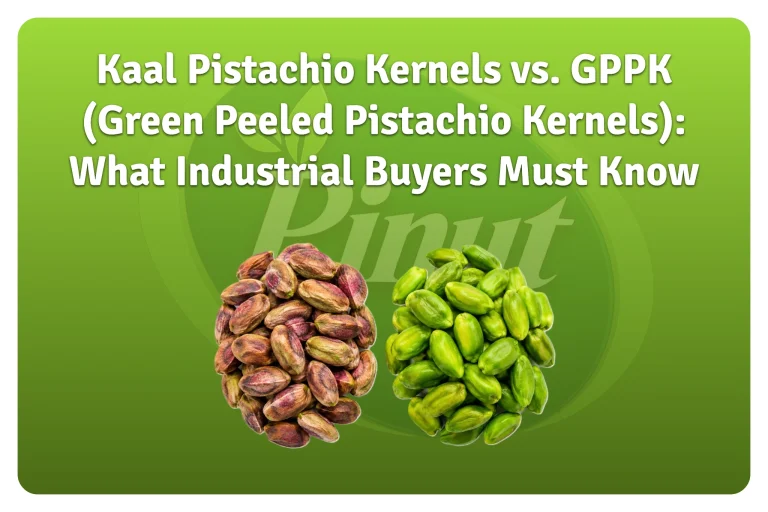
Kaal Pistachio Kernels vs. GPPK: What Industrial Buyers Must Know
Table of Contents
Quick Takeaway: Key Differences at a Glance
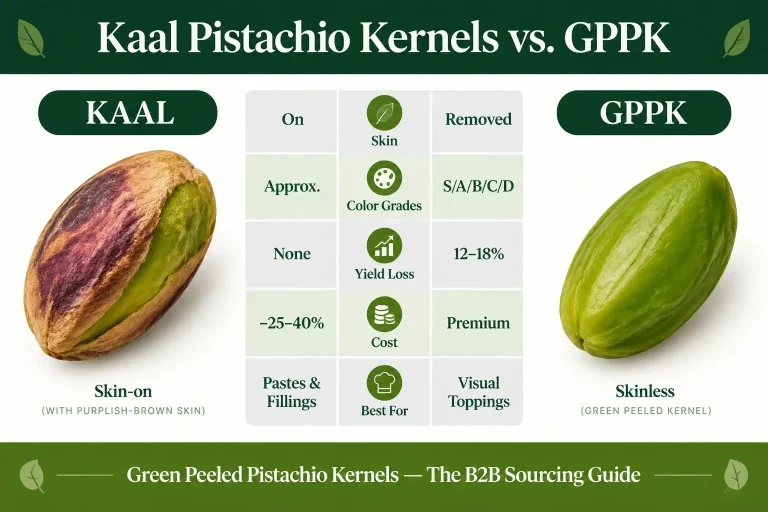
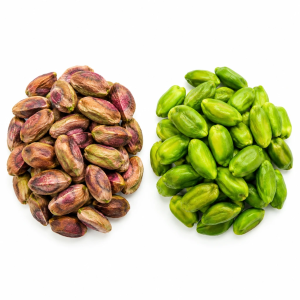
While both products originate from immature, early-harvested nuts to preserve intense green color, Kaal pistachio kernels are raw, skin-on kernels (with their natural purplish/brown outer pellicle intact), offering a richer lipid profile, authentic nutty aroma, and cost efficiency. In contrast, GPPK (Green Peeled Pistachio Kernels) undergo an intensive blanching and mechanical peeling process to completely strip the outer skin, yielding a uniform emerald-green kernel sorted rigorously by color grade (Grades S, A, B, C, D). Choose Kaal kernels for cost-sensitive food processing, paste production, and general confectionery; specify GPPK for ultra-premium visible toppings, high-end pastry decorating, and applications where zero skin residue and extreme color purity are non-negotiable.
In international wholesale and food manufacturing, sourcing the right grade of green pistachio is critical. Industrial procurement teams frequently encounter two premium raw materials: Kaal pistachio kernels (early-picked kernels) and GPPK (Green Peeled Pistachio Kernels).
Because both ingredients derive from early harvests—picked well before physiological maturity when chlorophyll concentrations are highest—procurement managers often confuse their specifications, processing stages, and pricing structures. However, conflating these two items leads to substantial manufacturing discrepancies, unpredictable yields, and misaligned production costs.
For distributors, confectioners, and food scientists looking to master procurement, understanding the technical boundary between raw skin-on Iranian Kaal pistachio kernel sourcing and refined skin-less GPPK is essential. This guide breaks down the biological differences, processing methods, color grading systems, and industrial applications governing both ingredients.
Technical Comparison: Kaal Kernels vs. GPPK
To evaluate how each kernel performs in automated production lines, consider their fundamental technical parameters:
| Specification | Parameter | Kaal Pistachio Kernels | GPPK (Green Peeled Pistachio Kernels) |
|---|---|---|---|
| Harvest Stage | Parameter A | Immature (July–August, early harvest) | Immature (Harvested early, then re-processed) |
| Pellicle (Outer Skin) | Parameter B | Present (Purplish/reddish/brown skin intact) | Removed (100% skinless via blanching/friction) |
| Visual Appearance | Parameter C | Green interior hidden beneath natural skin | Exposed, uniform emerald green to pale green |
| Color Sorting Standard | Parameter D | Whole vs. Splits, approximate greenness | Optical sorting: Grades S, A, B, C, D, and Splits |
| Aflatoxin Risk Profile | Parameter E | Exceptionally low (closed shells at harvest) | Lowest detectable limits (closed shell + washed) |
| Primary Processing | Parameter F | Hulling, de-shelling, dehydration | Kaal sorting → blanching → peeling → optical grading |
| Yield & Processing Cost | Parameter G | Higher natural yield; lower processing cost | Yield loss during peeling (~12–18%); premium processing fee |
| Target Industrial Use | Parameter H | Nut pastes, extracts, praline, mixed fillings | Visual toppings, fine pastry, gelato, luxury chocolate bars |
1. What Are Kaal Pistachio Kernels?
Kaal pistachio kernels (derived from the Persian term کال, meaning unripe or immature) are harvested roughly one to two months before the regular autumn harvest. At this stage, the pistachio nut shell has not naturally split, and the kernel inside is dense, firm, and saturated with vibrant green chlorophyll rather than yellow carotenes.
Once harvested, these closed-shell nuts are cracked mechanically to extract the kernel. The protective seed coat (testa/pellicle) remains fully attached.
Key Characteristics:
- Natural Texture & Aroma: The intact pellicle retains valuable fiber, polyphenols, and essential oils, providing a rounded, authentic pistachio taste.
- Low Aflatoxin Contamination: Because Kaal nuts are gathered while their protective outer hulls and shells are hermetically sealed, environmental fungi such as Aspergillus flavus rarely penetrate, ensuring stringent compliance with stringent EU import safety standards.
- Versatile Commercial Foundation: As detailed in our comprehensive portfolio of Iranian pistachio kernel varieties, Kaal kernels serve as the core foundational commodity from which high-grade derivatives are extracted.
2. What Is GPPK (Green Peeled Pistachio Kernel)?
GPPK represents the pinnacle of specialized nut refinement. It begins directly with selected high-grade Kaal kernels.
The manufacturing sequence requires controlled hydration and scalding (blanching) followed by mechanical friction rollers to slip off the outer skin without crushing the inner cotyledons. The naked green kernels are then dried back to a controlled moisture content () and passed through multi-camera color sorters.
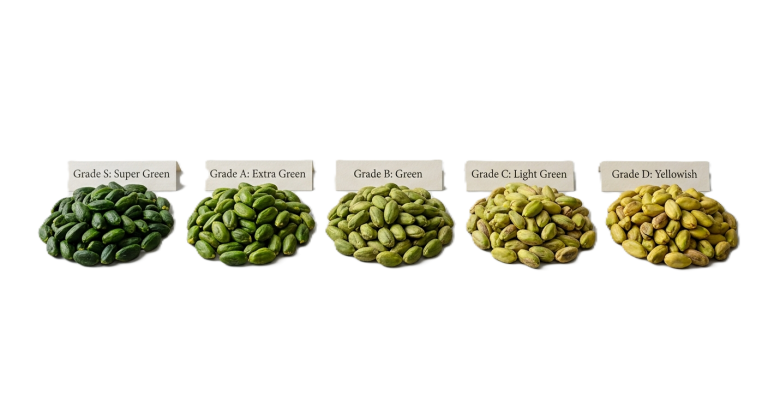
The Universal GPPK Color Grading Scale:
Industrial buyers purchase GPPK based on standardized color codes determined by optical sorting:
- Grade S (Dark/Vivid Green): The rarest, deepest emerald shade; reserved for top-tier visual ornamentation.
- Grade A (Deep Green): Exceptional green consistency; international standard for fine bakeries and patisseries.
- Grade B (Medium Green): Balanced bright green; standard for artisanal ice cream makers and luxury chocolate inclusions.
- Grade C (Light Green / Yellowish Green): Softer green coloration; perfect where color is desirable but cost margins are tighter.
- Grade D / Splits: Pale/yellowish tones or split fragments; ideal for direct incorporation into luxury creams where whole presentation is not required.
3. Industrial Processing & Manufacturing Differences
Understanding how both options perform under thermal, chemical, and physical processing dictates operational ROI:
A. Grinding, Milling, and Pastes
When processing nuts into smooth pastes or purees:
- Using Kaal Kernels: The fibrous outer skin introduces dark specks into the paste and alters the viscosity slightly. If your formulation allows for a rustic, natural visual tone, Kaal kernels are the ideal raw ingredient.
- Using GPPK: If you are manufacturing ultra-smooth, bright green pistachio paste for luxury gelato or confectionery coatings without synthetic dyes (E141 chlorophyll complexes), GPPK delivers a radiant, uniform green matrix without particulate speckling.
B. Thermal Stability and Roasting
- Kaal Kernels: The pellicle acts as a buffer against direct thermal shock during roasting or extrusion, guarding the interior fatty acids from premature oxidation.
- GPPK: Because the raw cotyledon is completely exposed, GPPK requires delicate, low-temperature handling. Excessive roasting rapidly browns the delicate surface chlorophyll, nullifying the value of its visual grade.
4. Cost Efficiency & Yield Analysis for Procurement Teams
The economic divide between Kaal and GPPK hinges on two variables: processing loss and labor/machinery inputs.
- Procurement Budget: Purchasing bulk wholesale Iranian pistachios in Kaal kernel form reduces initial capital expenditure by roughly 25% to 40% compared to middle-tier GPPK grades.
- Waste Optimization: If your finished consumer good hides the nut interior (e.g., inside energy bars, protein powders, fillings, or baked batters), purchasing GPPK is an operational over-specification. Kaal kernels provide the necessary natural green hue upon shearing at a fraction of the cost.
- Display Value: Conversely, if your product displays whole or chopped kernels on top of chocolate tablets, artisan macarons, or mortadella, GPPK’s stark visual contrast provides immediate market differentiation and justifies premium packaging claims.
To balance inventory strategies across different manufacturing runs, buyers often consult our overview of diverse pistachio types and commercial grades to align product lines with customer expectations.
Conclusion
Both Kaal pistachio kernels and GPPK provide strategic advantages to the global food sector. Selecting between them is a matter of clear manufacturing intent:
- Source Kaal pistachio kernels when your primary drivers are natural green pigmentation, full-bodied nut flavor, cost optimization, and bulk processing into purees, extracts, or baked fillings.
- Source GPPK when absolute visual elegance, certified chlorophyll color grades, zero particulate skin residue, and high-end aesthetic presentation drive your brand equity.
By pairing clear ingredient specifications with rigorous supplier testing, industrial buyers can streamline production costs while elevating final product quality.
