
Blog
Iranian Pistachios: The Complete Guide to Types, Processing & Global Export

Introduction to Iranian Pistachios & Global Position
History of Pistachio Cultivation in Iran:
Pistachios have been cultivated in Iran for thousands of years, with evidence dating back over 7,000 years. Traditionally grown in the arid regions of Kerman, Yazd, Rafsanjan, and Khorasan, these nuts became a staple of Persian agriculture and cuisine. Over time, Iran developed advanced cultivation techniques, including selective breeding, irrigation management, and natural pest control, creating some of the world’s most flavorful and resilient pistachio varieties.
Iran’s Role in the Global Pistachio Market:
Today, Iran is one of the leading pistachio producers and exporters worldwide. Accounting for a significant share of global production, Iranian pistachios supply markets across Asia, Europe, the Middle East, and North America. Iranian exporters are renowned for providing consistent, high-quality nuts in various forms, from in-shell pistachios to shelled pistachio kernels, catering to both retail and industrial B2B buyers.
Production Statistics & Global Ranking:
Iran’s annual pistachio production typically exceeds 250,000 metric tons, making it a top contender alongside the United States in the global market. Key cultivation regions like Kerman and Rafsanjan contribute the majority of the harvest, with pistachios graded according to size, color, and kernel quality. These standards ensure uniformity and reliability, which are critical for export markets and large-scale food manufacturers.
Why Iranian Pistachios Are Premium Worldwide:
Iranian pistachios are celebrated for their naturally rich flavor, vibrant green kernel, and large size. Factors contributing to their premium quality include:
- Ideal climate: hot, dry summers and cold winters
- Mineral-rich soil that enhances taste and texture
- Long-established cultivation techniques and expertise
- Strict sorting and grading practices to meet international quality standards
These qualities make Iranian pistachios highly sought after in gourmet, confectionery, and industrial markets, securing their position as a globally recognized premium product.
Types of Iranian Pistachios (Export Varieties)
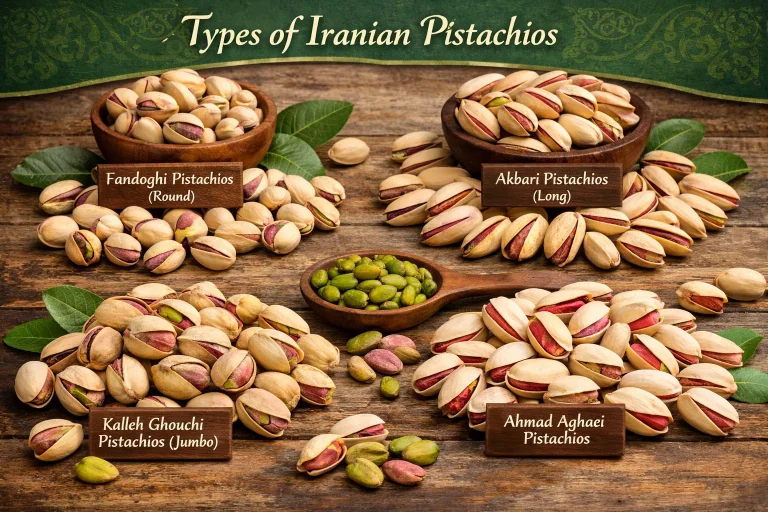
This section highlights the main Iranian pistachio varieties, their commercial qualities, export destinations, and industrial uses.
Fandoghi Pistachios
- Size & Grading: Medium-sized, round shape, uniform sizing for export and industrial processing
- Flavor Profile: Sweet, nutty, and mildly aromatic
- Main Export Destinations: European Union, UAE, India
- Industrial Suitability: Ideal for snack packaging, confectionery toppings, and bakery ingredients
Akbari Pistachios
- Size & Grading: Large and elongated, premium-grade kernels suitable for high-end markets
- Flavor Profile: Rich, buttery taste with a slightly sweet finish
- Main Export Destinations: China, Europe, North America
- Industrial Suitability: Suitable for pistachio kernel production, luxury confectionery, and wholesale bulk exports
Ahmad Aghaei Pistachios
- Size & Grading: Small to medium, round shape, consistent color
- Flavor Profile: Mildly sweet and nutty, delicate aroma
- Main Export Destinations: Middle East, Europe, Southeast Asia
- Industrial Suitability: Perfect for chocolate coatings, snack mixes, and retail packaging
Kalleh Ghouchi Pistachios
- Size & Grading: Extra-large, heart-shaped, premium-grade pistachios
- Flavor Profile: Buttery, intense nutty flavor, highly aromatic
- Main Export Destinations: North America, UAE, Europe
- Industrial Suitability: High-end retail packaging, gourmet confectionery, and industrial pistachio kernel production
Green Kernel Pistachios
- Size & Grading: Uniformly sized, bright green kernels, premium quality
- Flavor Profile: Intensely nutty, aromatic, high flavor retention
- Main Export Destinations: Global food manufacturers and industrial buyers
- Industrial Suitability: Bakery products, pistachio paste, pistachio butter, and other processed foods
Comparison of Iranian Pistachio Varieties
| Variety | Size & Grading | Flavor Profile | Main Export Destinations | Industrial Suitability | Notes / Specialty |
|---|---|---|---|---|---|
| Fandoghi | Medium, round, uniform | Sweet, nutty, mild aroma | EU, UAE, India | Snacks, confectionery, bakery toppings | Popular for mid-range retail and industrial snacking products |
| Akbari | Large, elongated, premium | Rich, buttery, slightly sweet | China, Europe, North America | Pistachio kernels, luxury confectionery, bulk exports | Highly prized in industrial pistachio kernel production |
| Ahmad Aghaei | Small-medium, round, consistent color | Mildly sweet, delicate aroma | Middle East, Europe, SE Asia | Chocolate coatings, snack mixes, retail packaging | Widely used in confectionery and chocolate industry |
| Kalleh Ghouchi | Extra-large, heart-shaped | Buttery, intense nutty flavor | North America, UAE, Europe | Gourmet retail, premium confectionery, industrial kernels | Premium export variety, often sold as luxury pistachios |
| Green Kernel | Uniform size, bright green | Intensely nutty, highly aromatic | Global industrial buyers | Bakery, pistachio paste, pistachio butter, processed foods | Used primarily for industrial processing and high-value export |
Pistachio By-Products & Derivatives
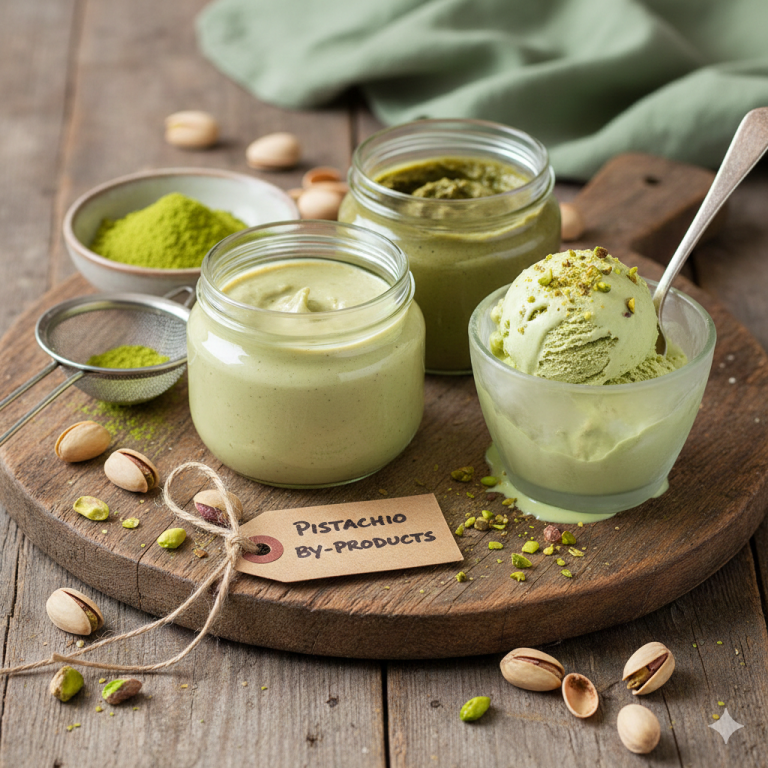
Iranian pistachio by-products play a critical role in global food manufacturing, confectionery production, and industrial applications. Beyond whole pistachios, value-added derivatives such as pistachio kernels, paste, butter, oil, and powder allow manufacturers to integrate pistachio flavor, texture, and nutritional value into a wide range of products.
For international buyers, understanding processing methods, moisture control, oxidation prevention, and storage requirements is essential to maintain quality during bulk shipment and long-term storage.
1. Pistachio Kernels
Processing Details:
- Produced by mechanically shelling dried pistachios.
- Sorted using optical color sorters to remove defects.
- Graded by size (whole, halves, pieces).
- Can be supplied raw or lightly roasted.
- Moisture typically reduced to 4–6% to prevent spoilage.
- Aflatoxin-tested before export to meet EU and international standards.
🏭 Industrial Applications
- Chocolate and confectionery
- Ice cream production
- Bakery fillings and toppings
- Snack manufacturing
📦 Storage & Shelf Life
- Store at 0–5°C for long-term storage.
- Relative humidity below 65%.
- Oxygen exposure should be minimized (vacuum or nitrogen-flushed packaging recommended).
- Shelf life: 12–18 months under controlled conditions.
Proper cold storage prevents rancidity due to the natural oil content of pistachio kernels.
2. Green Kernel (GPPK – Good Premium Pistachio Kernel)
✅ Processing Details
- Harvested earlier than regular pistachios to preserve green color.
- Carefully peeled to remove skin without damaging kernel color.
- Graded based on greenness (Grade A, B, C).
- Hand-sorted for uniform appearance.
- Low-temperature drying to protect chlorophyll.
🏭 Industrial Applications
- Premium pistachio paste
- High-end confectionery
- Luxury bakery and desserts
- Gelato and ice cream bases
📦 Storage & Shelf Life
- Requires refrigerated storage (0–4°C).
- Sensitive to light and oxygen — vacuum packaging recommended.
- Shelf life: 12 months under cold storage.
- Color stability decreases if exposed to heat or direct sunlight.
Green Kernel (GPPK) is considered a high-value export product due to its vibrant color and strong aroma.
3. Pistachio Paste
✅ Processing Details
- Produced by grinding premium pistachio kernels.
- Can be 100% pure or blended (depending on industrial requirement).
- Grinding temperature controlled to avoid oil separation.
- Homogenization ensures smooth texture.
- Packed in food-grade containers (5kg, 10kg, 25kg).
🏭 Industrial Applications
- Pastry and cake fillings
- Ice cream production
- Chocolate manufacturing
- Dessert sauces
📦 Storage & Shelf Life
- Store at 4–10°C.
- Stir before use if natural oil separation occurs.
- Avoid exposure to air to prevent oxidation.
- Shelf life: 9–12 months depending on oil content.
For large-scale buyers seeking a pistachio paste supplier, consistency in texture, color, and fat content is critical.
4. Pistachio Butter
✅ Processing Details
- Made by grinding roasted or raw kernels into a creamy consistency.
- Can be smooth or crunchy.
- No additives in premium wholesale production.
- Oil content naturally ranges between 45–55%.
🏭 Industrial Applications
- Vegan spreads
- Health-focused snack bars
- Protein-based products
- Dairy alternatives
📦 Storage & Shelf Life
- Store at 10–15°C.
- Avoid temperature fluctuations.
- Natural oil separation is normal.
- Shelf life: 6–12 months.
For pistachio butter wholesale, packaging options include bulk industrial tubs or private-label jars.
5. Pistachio Oil
✅ Processing Details
- Extracted through cold pressing or mechanical pressing.
- Filtered to remove solids.
- Premium oil retains natural aroma and green tint.
- Packed in dark glass or metal containers to prevent light damage.
🏭 Industrial Applications
- Gourmet culinary use
- Salad dressings
- Cosmetic and skincare products
- Flavoring agent in premium foods
📦 Storage & Shelf Life
- Store in dark, cool environment (below 20°C).
- Protect from light exposure.
- Shelf life: 12 months unopened.
- Oxidation increases if exposed to heat or air.
6. Pistachio Powder
✅ Processing Details
- Produced by grinding dried kernels.
- Sifted for uniform particle size.
- Can be roasted or raw.
- Moisture carefully controlled to prevent clumping.
🏭 Industrial Applications
- Bakery premixes
- Ice cream bases
- Chocolate flavoring
- Health and protein products
📦 Storage & Shelf Life
- Store in airtight packaging.
- Cool and dry environment (below 15°C recommended).
- Shelf life: 9–12 months.
- Avoid moisture absorption.
Uniform particle size is essential for consistent industrial baking.
7. Pistachio Shells (Industrial Use)
✅ Processing Details
- Collected after mechanical shelling.
- Cleaned and dried.
- Sometimes crushed depending on industrial requirement.
🏭 Industrial Applications
- Biomass fuel
- Abrasives
- Activated carbon production
- Horticultural mulch
- Eco-friendly industrial filler
📦 Storage & Shelf Life
- Store in dry warehouse conditions.
- Low moisture prevents mold formation.
- Long shelf life if kept dry.
This sustainable by-product supports environmentally friendly industries.
✅ Why Processing & Storage Matter for Export Buyers
For international importers and food manufacturers, proper processing and storage:
- Preserve flavor and aroma
- Prevent aflatoxin contamination
- Extend shelf life during overseas shipping
- Maintain consistent industrial performance
- Protect product color (especially Green Kernel)
Professional pistachio exporters in Iran implement strict quality control and moisture monitoring to ensure compliance with EU, Asian, and Middle Eastern import regulations.
Pistachio Processing Methods
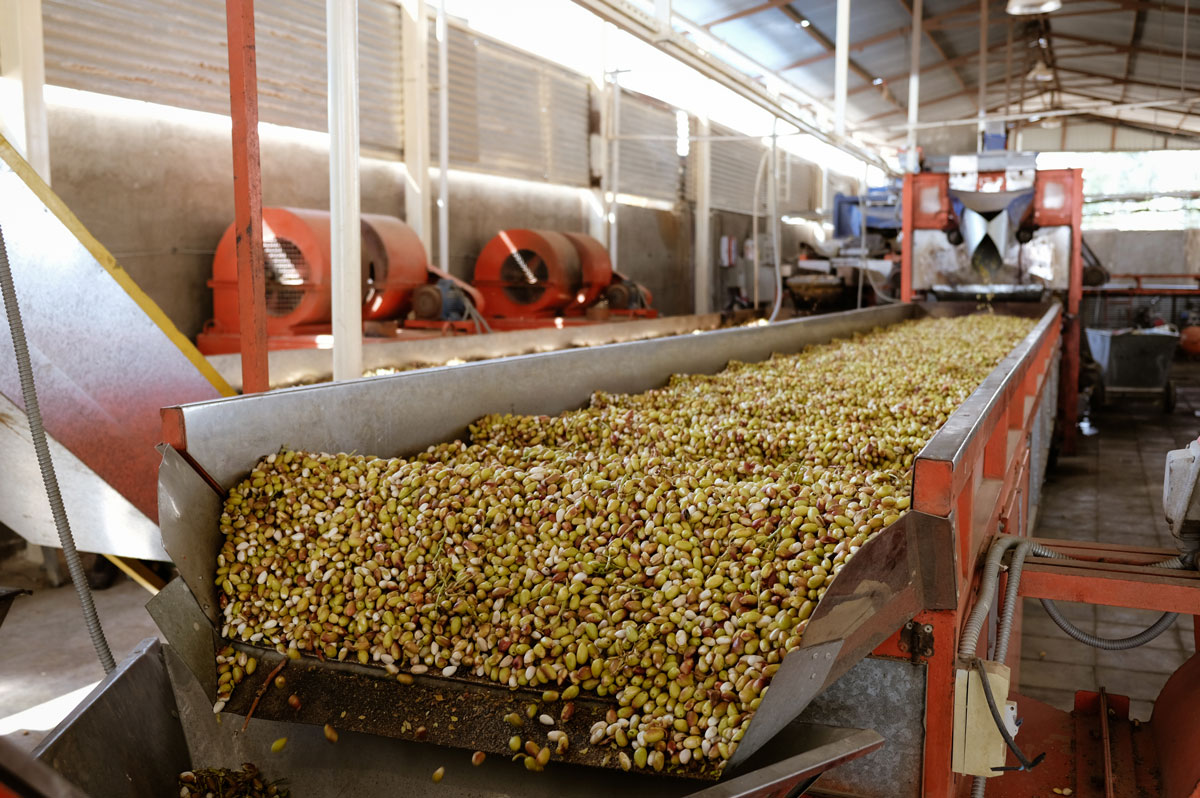
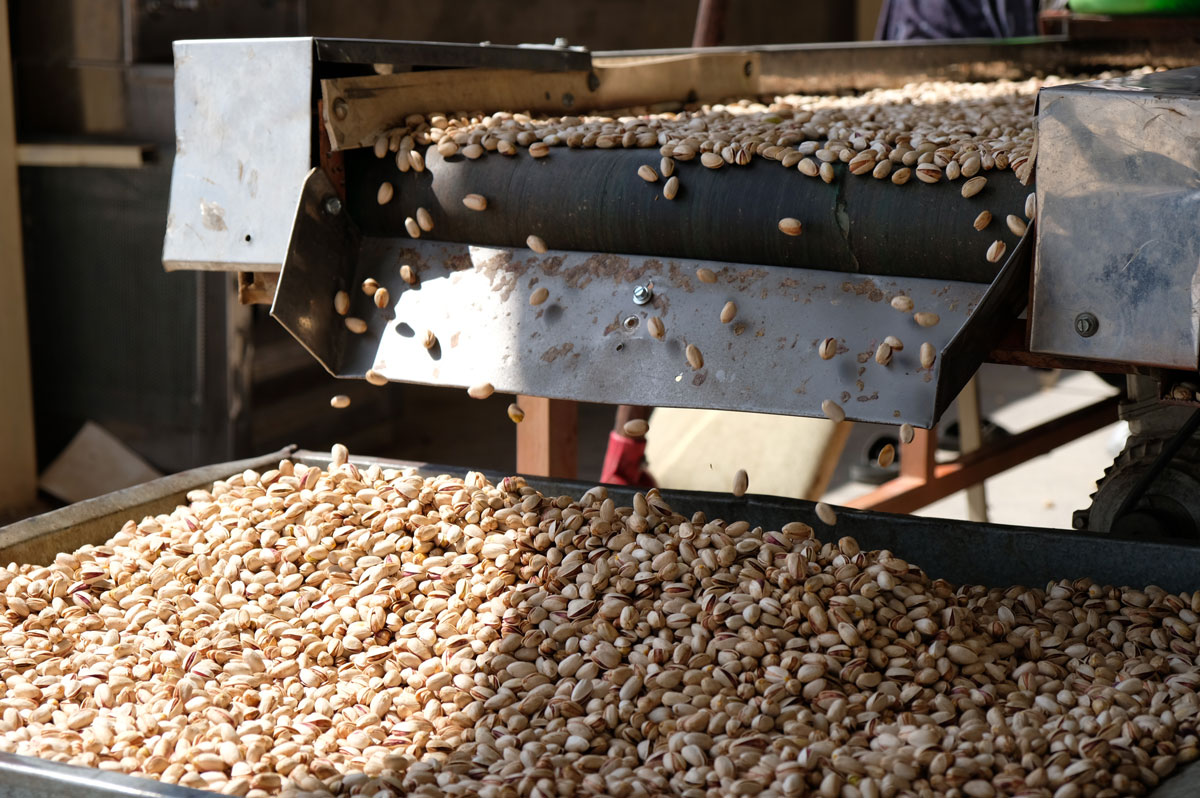
Pistachio processing is a critical factor in determining final product quality, safety, shelf life, and export compliance. In Iran, modern processing facilities combine traditional harvesting expertise with advanced sorting, drying, roasting, and packaging technologies to ensure export-quality pistachios.
For industrial buyers and global importers, understanding the complete pistachio processing workflow helps evaluate supplier capability, hygiene standards, and product consistency.
Step-by-Step Pistachio Processing Workflow:
1. Harvesting
- Harvest season typically runs from late August to October.
- Pistachios are harvested when the hull naturally splits and the kernel reaches optimal maturity.
- Mechanical shakers are used to prevent ground contamination.
- Rapid transfer to processing facilities (within 24 hours) is essential to prevent fungal growth.
Why It Matters:
Immediate processing reduces the risk of aflatoxin contamination and preserves kernel color and flavor.
2. Hulling (De-Husking)
- The outer soft hull is mechanically removed.
- Water flotation systems separate floating (defective) nuts from high-quality ones.
- Clean water washing removes debris and dust.
Industrial Importance:
Efficient hulling prevents staining of shells and maintains visual quality for export markets.
3. Drying
After hulling, pistachios must be dried to reduce moisture content.
- Hot-air drying systems reduce moisture to approximately 4–6%.
- Temperature is carefully controlled to avoid kernel damage.
- Drying duration depends on climate and initial moisture level.
Why Drying Is Critical:
- Prevents mold formation
- Extends shelf life
- Maintains export compliance
- Reduces aflatoxin risk
Proper moisture control is a key element in industrial pistachio processing.
4. Primary Grading & Sorting
Once dried, pistachios undergo several grading stages:
- Size grading: Based on count per ounce (18/20, 20/22, etc.)
- Open-shell vs closed-shell separation
- Mechanical and optical sorting
- Color sorting technology to remove stained or defective nuts
Quality Control Measures:
- Removal of insect-damaged nuts
- Separation of split vs unsplit pistachios
- Elimination of foreign materials
Uniform grading is essential for bulk pistachio export contracts.
5. Roasting (For Processed Products)
For roasted pistachio production:
- Controlled roasting temperatures enhance flavor and crunch.
- Dry roasting or oil roasting methods may be used.
- Salt or flavoring can be added during or after roasting.
Roasting Benefits:
- Improves aroma
- Enhances texture
- Extends consumer appeal
- Increases retail value
Roasting must be precisely controlled to prevent overcooking or oil degradation.
6. Further Processing (Value-Added Products)
Depending on buyer requirements, pistachios may undergo additional processing:
- Shelling → Pistachio kernels
- Grinding → Pistachio paste or butter
- Slicing & chopping → Bakery use
- Fine grinding → Pistachio powder
- Cold pressing → Pistachio oil extraction
Each stage follows strict hygiene and temperature control protocols.
7. Final Quality Inspection
Before packaging, pistachios undergo:
- Aflatoxin laboratory testing
- Moisture content verification
- Microbiological testing
- Visual inspection
- Metal detection scanning
Export markets such as the EU require strict compliance with aflatoxin limits.
8. Packaging
Packaging depends on the final market:
Bulk Packaging:
- 10kg, 25kg, or 50kg food-grade bags
- Vacuum-sealed bags
- Nitrogen-flushed packaging
- Carton or jumbo bags for industrial buyers
Retail Packaging:
- Private-label options
- Branded consumer packs
- Modified atmosphere packaging (MAP)
Proper packaging protects pistachios from:
- Oxygen exposure
- Moisture absorption
- Light degradation
- Mechanical damage during shipping
Industrial Processing Standards
Professional pistachio processing facilities in Iran operate under:
- HACCP food safety systems
- ISO 22000 certification
- Aflatoxin monitoring programs
- Traceability systems from farm to export
These standards ensure pistachios meet international food safety regulations.
Why Processing Standards Matter for Importers
For global buyers and pistachio exporters, processing quality directly affects:
- Product shelf life
- Flavor retention
- Color stability
- Food safety compliance
- Brand reputation
- Customer satisfaction
Industrial pistachio processing is not just about roasting or drying — it is a controlled system that ensures premium pistachios reach international markets safely and consistently.
Industrial Applications of Pistachios
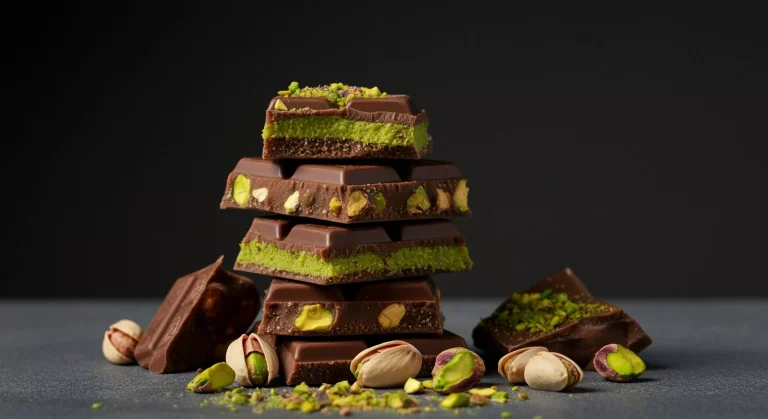
Iranian pistachios are not only consumed as premium snacks but also serve as high-value raw materials across multiple food industries. Their natural flavor, vibrant green color, high oil content, and nutritional profile make them a preferred ingredient for manufacturers worldwide.
For industrial buyers searching for a reliable pistachio ingredients supplier, understanding application-specific requirements is essential. Different industries require specific forms such as kernels, paste, powder, butter, or chopped pistachios — each with defined technical standards.
1. confectionery Industry
The confectionery sector is one of the largest consumers of pistachio kernels and derivatives.
🔹 Common Applications:
- Pistachio pralines
- Nougat and halva
- Turkish delight
- Marzipan blends
- Chocolate fillings
🔹 Preferred Forms:
- Whole kernels (for premium chocolates)
- Chopped pistachios
- Pistachio paste
- Green Kernel (GPPK) for luxury confectionery
🔹 Industrial Requirements:
- Consistent green color
- Controlled particle size
- Low moisture content (4–6%)
- Aflatoxin-tested batches
Pistachios enhance both the visual appeal and flavor complexity of confectionery products, increasing perceived product value in premium markets.
2. Chocolate & Bakery Industry
Pistachios are widely used in both artisan and industrial bakery production.
🔹 Pistachio for Bakery Applications:
- Cake fillings
- Croissants and Danish pastries
- Biscotti and cookies
- Muffins and sponge cakes
- Decorative toppings
🔹 Chocolate Applications:
- Chocolate bars with whole kernels
- Pistachio cream-filled chocolates
- Pistachio ganache
- Premium coated nuts
🔹 Technical Requirements:
- Uniform slicing for decoration
- Stable pistachio paste texture
- Heat-resistant color retention
- Controlled oil separation
Because pistachios contain natural oils, temperature control during baking is critical to preserve aroma and prevent bitterness.
Using high-quality pistachio ingredients improves flavor depth, texture contrast, and product differentiation in competitive bakery markets.
3. Ice Cream Production
Pistachio is one of the most popular premium ice cream flavors globally.
🔹 Pistachio for Ice Cream Production:
- Pistachio paste (100% pure)
- Green Kernel powder
- Fine pistachio pieces
- Pistachio butter blends
🔹 Why It Works:
- Natural green color
- Strong nutty aroma
- High fat content improves creaminess
- Excellent flavor stability in frozen environments
🔹 Industrial Considerations:
- Paste must be homogenized
- Color consistency across batches
- Low microbial count
- Cold-chain transport compatibility
Premium ice cream manufacturers often require high-grade Green Kernel (GPPK) to achieve vibrant color and authentic taste.
4. Dairy Products
Beyond ice cream, pistachios are increasingly used in innovative dairy formulations.
🔹 Applications:
- Pistachio-flavored yogurt
- Milk beverages
- Dessert creams
- Cheesecake bases
- Flavored dairy sauces
🔹 Ingredient Forms:
- Pistachio powder
- Pistachio paste
- Pistachio extract
- Fine kernel granules
The nut’s natural fat and protein profile enhances mouthfeel and nutritional appeal in dairy-based products.
5. Healthy Snacks Industry
As global consumers shift toward protein-rich and natural foods, pistachios play a major role in healthy snack manufacturing.
🔹 Applications:
- Protein bars
- Nut mixes
- Energy balls
- Granola blends
- Keto snack packs
🔹 Why Manufacturers Prefer Pistachios:
- High plant-based protein
- Healthy fats
- Fiber content
- Clean-label compatibility
Roasted and salted pistachios remain a staple in bulk snack production, while chopped kernels are commonly used in granola and bar formulations.
6. Vegan & Plant-Based Products
The growth of plant-based diets has expanded pistachio usage beyond traditional markets.
🔹 Applications:
- Pistachio milk alternatives
- Vegan spreads
- Plant-based desserts
- Dairy-free pistachio creams
- Vegan protein snacks
🔹 Industrial Advantages:
- Natural emulsifying properties
- Rich, creamy texture
- Strong flavor even at low inclusion rates
- Allergen-aware production options
Pistachio butter and paste are especially popular in vegan product development due to their smooth consistency and nutritional value.
Why Pistachios Are a Strategic Industrial Ingredient:
For manufacturers seeking a dependable pistachio ingredients supplier, pistachios offer:
- Flavor differentiation
- Premium positioning
- Nutritional enhancement
- Natural color appeal
- Versatility across multiple industries
From chocolate factories to large-scale ice cream production lines, pistachios remain one of the most valuable nut-based ingredients in global food manufacturing.
Iranian Pistachio Production & Quality Control
Iran’s reputation as a global pistachio supplier is built not only on flavor and variety, but also on strict production management and quality control systems. For international buyers, especially those in regulated markets, understanding pistachio quality control in Iran is essential before entering long-term supply agreements.
From harvest timing to aflatoxin testing and export packaging, Iranian producers follow structured procedures to deliver export quality pistachios that meet international food safety standards.
1. Harvest Season & Farm Management
🌿 Harvest Period
- Main harvest: Late August to October
- Timing varies depending on variety (Fandoghi, Akbari, Ahmad Aghaei, etc.)
- Harvest begins when shells naturally split and kernels reach optimal maturity
🌾 Harvest Practices
- Mechanical tree shakers minimize ground contact
- Rapid collection prevents contamination
- Immediate transport to processing facilities (within 24 hours)
Why Timing Matters
- Overripe pistachios increase aflatoxin risk
- Early harvesting reduces color intensity in kernels
- Proper timing preserves oil content and flavor
Iran’s climate — hot summers and dry air — naturally supports pistachio drying and reduces fungal growth risk when managed correctly.
2. Sorting & Grading System
After drying, pistachios undergo multi-stage sorting and grading processes.
🔹 Size Grading
- Measured by count per ounce (e.g., 18/20, 20/22, 22/24)
- Larger sizes typically command higher export prices
- Uniform sizing is critical for bulk contracts
🔹 Open-Shell vs Closed-Shell Separation
- Open-shell pistachios preferred for retail
- Closed-shell used for kernel production
🔹 Optical & Mechanical Sorting
- Color sorters remove stained shells
- Defect detection systems identify damaged nuts
- Metal detectors ensure product safety
🔹 Kernel Grading
For pistachio kernels and Green Kernel (GPPK):
- Color intensity grading (especially for export markets)
- Removal of broken pieces (if whole grade required)
- Moisture testing before packaging
Uniform grading ensures consistency for manufacturers using pistachios in chocolate, bakery, or ice cream production.
3. Aflatoxin Control & Food Safety
Aflatoxin control is one of the most critical aspects of pistachio quality control in Iran.
🔬 What Is Aflatoxin?
A naturally occurring toxin produced by certain molds that may develop under improper storage or harvesting conditions.
🔹 Prevention Measures
- Rapid drying after harvest
- Controlled moisture levels (4–6%)
- Clean storage facilities
- Airflow monitoring
🔹 Laboratory Testing
- Pre-export aflatoxin analysis
- Sampling according to international standards
- Compliance with EU and Asian regulatory limits
Export shipments are tested before loading to ensure they meet destination-country requirements.
Strict aflatoxin management is essential for maintaining access to high-value markets such as the European Union.
4. Quality Certifications
Professional pistachio exporters in Iran operate under internationally recognized certifications to ensure compliance and traceability.
Common Certifications:
- HACCP (Hazard Analysis Critical Control Points)
- ISO 22000 (Food Safety Management System)
- Phytosanitary Certificate
- Certificate of Origin
- Health Certificate (when required)
Traceability Systems
Modern exporters implement batch tracking from farm to shipment, ensuring full transparency for international buyers.
Certifications build trust and support long-term supply contracts with food manufacturers and distributors.
5. Packaging Standards for Export
Proper packaging is essential to maintain export quality pistachios during international shipping.
🔹 Bulk Packaging Options
- 10kg, 25kg food-grade polypropylene bags
- Vacuum-sealed packaging
- Nitrogen-flushed bags
- Carton packaging with inner liners
- Jumbo bags for industrial buyers
🔹 Retail & Private Label Packaging
- Consumer-ready pouches
- Branded packaging
- Modified Atmosphere Packaging (MAP)
- Custom labeling per importer requirement
🔹 Storage & Shipping Conditions
- Cool, dry warehouses
- Protection from humidity
- Controlled container loading
- Refrigerated containers when necessary
Proper packaging protects pistachios from:
- Moisture absorption
- Oxidation
- Light degradation
- Mechanical damage during transit
Why Quality Control Matters for International Buyers
For importers, distributors, and industrial manufacturers, strong quality control systems ensure:
- Consistent flavor and color
- Reduced contamination risk
- Regulatory compliance
- Longer shelf life
- Lower rejection rates at destination ports
- Strong brand reputation
Professional pistachio quality control in Iran is a decisive factor for companies sourcing bulk pistachios, kernels, paste, or other derivatives for international markets.
Conclusion of This Section
Iranian pistachio production combines traditional agricultural expertise with modern food safety systems. From harvest timing to laboratory aflatoxin testing and export-ready packaging, quality control processes are designed to meet global standards.
For companies seeking export quality pistachios, evaluating processing facilities, certification status, and testing procedures is essential before finalizing supply agreements.
Iranian Pistachio Export Guide

Exporting pistachios from Iran requires proper documentation, compliance with international trade regulations, and coordination with logistics providers. For importers and distributors, understanding the export structure ensures smoother transactions, faster customs clearance, and reduced shipment risk.
Whether you are sourcing bulk pistachios, kernels, paste, or processed products, this guide explains the essential elements of exporting pistachios from Iran.
1. Required Export Documents
To successfully export pistachios from Iran, several official documents are required. These documents ensure product origin, quality, and compliance with the destination country’s regulations.
📄 Core Pistachio Export Documents:
- Commercial Invoice
Details product description, quantity, price, and total shipment value. - Packing List
Specifies packaging type, weight (net/gross), and pallet details. - Certificate of Origin
Confirms Iranian origin of the pistachios. Often required for customs clearance. - Phytosanitary Certificate
Issued by agricultural authorities confirming the product is free from pests and diseases. - Health Certificate (if required)
Required by certain countries for food imports. - Aflatoxin Test Report
Essential for EU and regulated markets. - Bill of Lading (B/L)
Issued by the shipping line for sea freight.
Proper documentation minimizes customs delays and ensures compliance with international food safety standards.
2. HS Code for Pistachios
The Harmonized System (HS) Code is essential for international trade classification.
📦 Pistachio HS Code:
- 0802.51 – Pistachios in shell
- 0802.52 – Shelled pistachios
Some countries may use extended subcategories depending on processing level (raw, roasted, salted).
Correct HS classification is crucial for:
- Determining import duties
- Calculating customs tariffs
- Trade statistics
- Regulatory compliance
Buyers should confirm HS code classification with their customs broker before shipment.
3. Shipping Terms (FOB, CIF & More)
International pistachio exports typically operate under Incoterms defined by the International Chamber of Commerce.
🚢 FOB (Free On Board)
- Seller delivers goods to the port of shipment.
- Buyer arranges freight and insurance.
- Common for experienced importers.
🚢 CIF (Cost, Insurance & Freight)
- Seller arranges shipping and insurance.
- Buyer receives goods at destination port.
- Preferred by buyers seeking simplified logistics.
Other Possible Terms:
- CFR (Cost and Freight)
- EXW (Ex Works)
- DDP (Delivered Duty Paid – less common)
Understanding Incoterms prevents misunderstandings regarding risk transfer and cost responsibilities.
4. Customs & Logistics Considerations
Exporting pistachios requires careful coordination between supplier, freight forwarder, and customs broker.
🔹 Shipping Methods:
- Sea freight (most common for bulk orders)
- Air freight (for urgent or high-value shipments)
🔹 Container Types:
- 20ft or 40ft dry containers
- Refrigerated containers for sensitive products (Green Kernel, paste)
🔹 Logistics Best Practices:
- Moisture-controlled loading
- Palletized packaging
- Container fumigation (if required)
- Pre-shipment inspection
🔹 Destination Market Requirements:
- EU: Strict aflatoxin controls
- China: Labeling compliance
- India: Import licensing
- GCC countries: Health certifications
Efficient logistics planning reduces delays, protects product quality, and ensures compliance with importing regulations.
5. Private Labeling & Bulk Supply
Many international buyers prefer private-label pistachio packaging or bulk supply agreements.
📦 Bulk Supply Options:
- 10kg, 25kg industrial packaging
- Jumbo bags for processors
- Vacuum-sealed bulk bags
🏷 Private Label Services:
- Custom branding
- Multilingual packaging
- Retail-ready consumer packs
- Barcode and regulatory labeling
📑 Long-Term Contracts:
- Annual supply agreements
- Fixed pricing models
- Volume-based discounts
- Scheduled shipments
For distributors and retail chains, working directly with an experienced exporter allows cost control, quality consistency, and supply reliability.
Key Considerations for International Buyers:
Before finalizing a pistachio export contract, buyers should evaluate:
- Supplier certification status
- Aflatoxin testing procedures
- Packaging capabilities
- Shipping flexibility
- Production capacity
- Payment terms (LC, TT, etc.)
Strong exporter-buyer communication reduces commercial risk and ensures long-term business stability.
Conclusion of This Section
Exporting pistachios from Iran involves more than simply shipping goods. It requires structured documentation, proper HS classification, compliance with destination regulations, and reliable logistics management.
For businesses looking to export pistachios from Iran, partnering with an experienced supplier ensures:
- Accurate documentation
- Regulatory compliance
- Safe transportation
- On-time delivery
- Consistent product quality
Major Import Markets for Iranian Pistachios
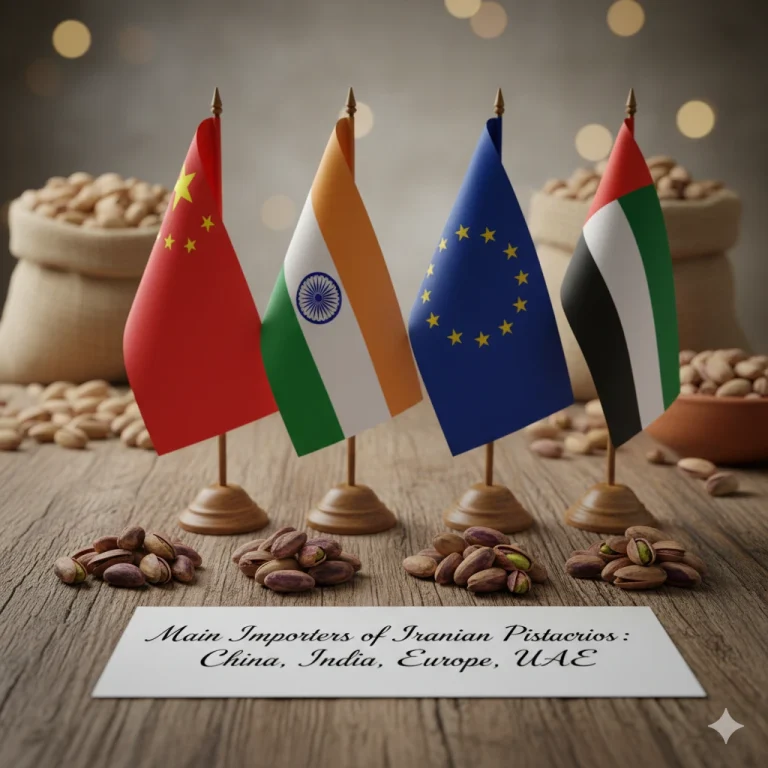
Iranian pistachios are exported to dozens of countries worldwide, serving retail, wholesale, and industrial markets. Demand varies by region depending on consumer preferences, food industry growth, pricing competitiveness, and regulatory requirements.
Understanding the major importing countries helps exporters and buyers identify high-demand markets, pricing trends, and growth opportunities.
1.china
China is one of the largest global consumers of pistachios and a key destination for Iranian exports.
Market Characteristics:
- Strong demand for in-shell pistachios
- Popular as a premium snack during festivals
- Large-volume seasonal purchases
- Price-sensitive but high consumption volume
Import Trends:
- Demand increases before Lunar New Year
- Growing middle-class consumption
- Increasing interest in high-quality, large-size varieties
Opportunities:
- Large-scale bulk shipments
- Long-term volume contracts
- Competitive pricing strategies
China remains one of the top pistachio importing countries, especially for in-shell varieties such as Akbari and Kalleh Ghouchi.
2. India
India is a rapidly growing pistachio market driven by population growth and expanding snack industries.
Market Characteristics:
- High demand for salted and roasted pistachios
- Strong consumption during religious festivals
- Expanding confectionery and bakery sectors
Import Considerations:
- Import duties impact pricing
- Quality consistency is important
- Growing demand for bulk pistachio kernels
Growth Potential:
- Rising disposable income
- Expansion of organized retail
- Increasing demand for healthy snack options
India offers long-term potential as pistachio consumption per capita continues to grow.
3. European Union Countries
The EU represents one of the most regulated but profitable markets for pistachio exports.
Key Countries:
- Germany
- Italy
- Spain
- France
- Netherlands
Market Characteristics:
- Strong demand for pistachio kernels
- Growth in bakery and gelato sectors
- Strict aflatoxin regulations
Import Requirements:
- Mandatory aflatoxin testing
- Traceability documentation
- Food safety certification
European buyers focus heavily on quality control, making compliance essential for sustained access.
4. United Arab Emirates (UAE)
The UAE serves both as a consumer market and a regional re-export hub.
Market Characteristics:
- High demand for premium pistachios
- Retail-ready packaging
- Strong re-export to GCC countries
Advantages:
- Strategic logistics hub
- High purchasing power
- Flexible trade environment
The UAE plays a strategic role in distributing Iranian pistachios throughout the Middle East and North Africa.
5. Russia
Russia represents a growing market for snack products, including pistachios.
Market Characteristics:
- Demand for roasted and salted pistachios
- Growing retail chains
- Price-sensitive but stable demand
Market Potential:
- Increasing urban consumption
- Expansion of modern supermarkets
- Demand for affordable premium snacks
Russia continues to offer stable demand, particularly for competitively priced bulk pistachios.
📊 Global Pistachio Import Trends
Analyzing pistachio import statistics reveals several global patterns:
🔹 Increasing Demand for Healthy Snacks
Consumers worldwide prefer protein-rich, plant-based snack options.
🔹 Growth in Food Manufacturing
Industrial demand for pistachio paste, powder, and kernels continues to rise.
🔹 Expansion of Premium Segments
Luxury confectionery and artisanal bakery sectors are increasing pistachio usage.
🔹 Diversification of Import Sources
Buyers seek stable suppliers to reduce supply chain risk.
📈 Market Demand Analysis
Several factors drive pistachio demand globally:
- Rising middle-class populations
- Urbanization and convenience food growth
- Premium dessert and chocolate expansion
- Plant-based diet trends
- Increasing awareness of nutritional benefits
Industrial manufacturers increasingly incorporate pistachios into:
- Ice cream
- Chocolate bars
- Vegan spreads
- Bakery products
- Protein snacks
🚀 Growth Opportunities for Exporters
Exporters and suppliers can expand market share by:
- Offering private-label packaging
- Providing consistent aflatoxin compliance
- Building long-term supply contracts
- Diversifying product formats (paste, powder, butter)
- Targeting emerging markets in Asia and Eastern Europe
Developing strong relationships with distributors in the top pistachio importing countries ensures stable and scalable growth.
Strategic Summary
The global pistachio trade continues to grow due to expanding industrial applications and rising consumer demand. China, India, EU countries, UAE, and Russia remain among the most important destinations for Iranian pistachios.
For exporters seeking international expansion, understanding regional demand patterns, regulatory requirements, and consumer preferences is critical.
This market awareness strengthens competitive positioning in the global pistachio trade.
Iranian vs American Pistachios
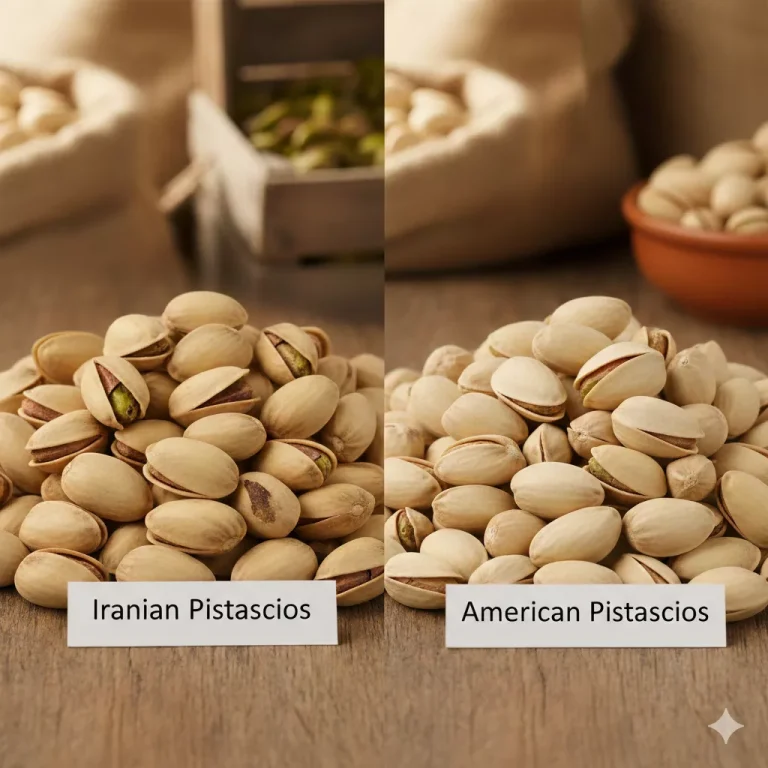
When it comes to the global pistachio trade, two countries dominate the market: Iran and the United States. Together, they account for the majority of worldwide production and exports.
Understanding the differences in quality, pricing, market positioning, and organic potential helps buyers choose the best pistachio supplier for their target market.
🇮🇷 Iranian Pistachios:
🌱 Key Characteristics
- Long history of cultivation (over 2,000 years)
- Naturally sun-dried
- Strong, rich, buttery flavor
- Wide variety of shapes and sizes
⭐ Popular Iranian Varieties:
- Akbari – Long, luxury-grade
- Ahmad Aghaei – Premium export favorite
- Fandoghi – Round, economical
- Kalleh Ghouchi – Jumbo size
✅ Strengths:
- Superior taste and aroma
- Competitive pricing
- Flexible grading & private labeling
- Strong presence in Asia & Middle East markets
🇺🇸 American Pistachios:
Key Characteristics:
- Large-scale mechanized farming
- Uniform size and appearance
- Primarily grown in California
⭐ Popular U.S. Types
- Kerman (dominant commercial variety)
- Available in roasted, salted, flavored retail packs
✅ Strengths
- Highly standardized processing
- Strong branding (retail-ready)
- Reliable supply chain
- Strong presence in Western markets
🔍 Quality Comparison:
Factor | Iranian Pistachios | American Pistachios |
Flavor | Richer, stronger taste | Mild, consistent flavor |
Appearance | More natural variation | Very uniform |
Kernel Color | Deep green | Light green/yellow |
Processing | Sun-dried | Mechanical drying |
Variety Range | Wide | Limited (mainly Kerman) |
👉 Gourmet markets often prefer Iranian pistachios for flavor.
👉 Supermarkets favor American pistachios for uniformity.
💰 Price Comparison
- Iranian pistachios are generally more price-competitive.
- American pistachios often command higher prices due to branding and standardized quality control.
- Sanctions and logistics can affect Iranian pricing depending on destination market.
For bulk buyers and wholesalers, Iran often provides better margins.
🌍 Market Positioning
Iranian Pistachios
- Strong in China, India, UAE, Russia
- Popular in traditional sweets and confectionery
- Preferred in bulk trade
American Pistachios
- Dominant in EU retail chains
- Strong presence in branded snack markets
- Higher penetration in North America
🌿 Organic Potential
🇮🇷 Iran
- Many farms use traditional, low-chemical farming methods
- Strong potential for certified organic exports
- Competitive pricing even in organic segment
🇺🇸 United States
- Certified organic available
- Higher cost structure
- Strong organic branding in Western markets
👉 Buyers looking for organic pistachio suppliers often explore Iranian farms for cost-effective certified production.
📈 Which Is the Best Pistachio Supplier?
It depends on your market goals:
✔ For premium flavor & competitive bulk pricing → Iranian pistachios
✔ For retail-ready, branded, uniform supply → American pistachios
✔ For organic growth markets → Both offer potential, Iran often more cost-effective
📊 Final Takeaway
Both Iran and the United States are global leaders in pistachio production, but they serve slightly different market needs:
- Iran = Flavor, variety, value
- USA = Standardization, branding, retail power
For international importers searching for “Iranian vs American pistachios” or the “best pistachio supplier”, the decision ultimately depends on target consumers, pricing strategy, and branding approach.
Pistachio Pricing & Global Trade Factors
Global pistachio prices are influenced by multiple economic and agricultural factors. Whether you’re sourcing from Iran or the United States, understanding these drivers helps you secure better contracts and margins.
🌾 1️. Harvest Volume Impact
📉 High Production Year
- Oversupply lowers global pistachio export price
- Exporters offer competitive bulk discounts
- Buyers gain stronger negotiation power
📈 Low Production Year
- Drought, frost, or water shortages reduce supply
- Prices can increase 15–40% depending on shortage severity
- Premium grades rise faster than standard grades
👉 Iran’s output can fluctuate due to climate conditions, while U.S. production is more mechanized but still weather-sensitive.
💱 2️. Currency Fluctuations
Pistachios are traded internationally in USD, but production costs are in local currencies.
Why Currency Matters:
- A weaker Iranian Rial → More competitive export pricing
- A stronger USD → Higher cost for EU, India, and Asian buyers
- EUR/USD shifts directly impact European importers
For example:
- When USD strengthens, EU buyers effectively pay more.
- When USD weakens, bulk pistachio price becomes more attractive internationally.
Currency timing can significantly affect large-volume contracts.
📦 3️. Supply & Demand Dynamics
Major Demand Drivers:
- China snack consumption growth
- India confectionery industry expansion
- EU demand for healthy snacks
- Ramadan & holiday seasonal demand
Supply Side Factors:
- Harvest size in Iran & U.S.
- Carry-over stock from previous season
- Trade restrictions or sanctions
- Shipping disruptions
If both Iran and the U.S. experience strong harvests, global prices stabilize.
If one has a short crop, the other often gains pricing power.
🚢 4️. Bulk Order Pricing Structure
Bulk pistachio price depends on:
- Kernel vs in-shell
- Size (oz count grading)
- Variety (Akbari, Ahmad Aghaei, Kerman)
- Processing (raw, roasted, salted)
- Packaging type (25kg bags vs retail packs)
- Payment terms (LC, TT, advance)
Typical Pricing Behavior:
- Larger contracts (1 container+) receive 3–8% discount
- Annual contracts secure more stable pricing
- Private label retail packaging increases unit price
📊 Key Global Trade Influencers
Factor | Impact on Price |
Drought in Iran | Price increase |
Strong USD | Higher cost for EU buyers |
China high demand | Global upward pressure |
Oversupply year | Competitive pricing |
High freight rates | Higher CIF price |
🌍 Export Pricing: FOB vs CIF
- FOB (Free on Board) → Buyer pays shipping & insurance
- CIF (Cost, Insurance, Freight) → Seller includes shipping cost
Freight volatility (especially container shortages) can add significant cost to CIF contracts.
📈 Market Insight
- Iranian pistachio export price is often more flexible in bulk trade.
- American pistachios maintain stable but premium positioning.
- Organic and premium jumbo grades command higher margins.
- Price seasonality peaks shortly after harvest (September–December).
🎯 Final Takeaway
Pistachio pricing is shaped by:
✔ Harvest volume
✔ Currency exchange rates
✔ Global supply & demand
✔ Freight & logistics
✔ Contract size
For importers searching “bulk pistachio price” or “pistachio export price”, timing and supplier strategy can reduce procurement cost significantly.
Why Work with an Iranian Pistachio Exporter?
Partnering with an exporter in Iran offers international buyers a powerful mix of price advantage, premium quality, and supply flexibility. As one of the world’s oldest pistachio producers, Iran remains a key player in global nut trade.
Here’s why working directly with an Iranian exporter like Pinut can strengthen your supply chain.
💰 1️. Competitive Advantage
Lower Production Costs
- Favorable agricultural conditions
- Experienced farming networks
- Competitive labor structure
Better Export Pricing
- Direct-from-origin sourcing
- Reduced intermediary margins
- Flexible negotiation for bulk contracts
👉 Importers sourcing through Pinut gain access to factory-level pricing and consistent export-grade quality.
🌱 2️. Direct Sourcing from Origin
Working with an Iranian exporter means:
✔ Direct relationships with farmers
✔ Better quality control at harvest
✔ Custom grading based on buyer needs
✔ Faster response to market demand shifts
Instead of buying through traders in third countries, companies like Pinut manage sourcing, processing, and export coordination from origin — improving transparency and cost efficiency.
📦 3️. Custom Packaging & Private Labeling
Modern pistachio buyers demand more than bulk sacks.
An experienced exporter can provide:
- Retail-ready pouches
- Vacuum-packed kernels
- 10kg / 25kg bulk bags
- Custom branding & private labeling
- Multilingual packaging compliance
Pinut supports both bulk container shipments and branded retail packaging tailored to your target market.
🤝 4️. Long-Term Supply Contracts
Global pistachio pricing can fluctuate due to harvest size and currency shifts. Long-term contracts provide:
- Price stability
- Guaranteed annual volumes
- Better payment term flexibility
- Priority allocation during short crop years
Partnering with a structured exporter like Pinut allows importers to lock in strategic supply and reduce procurement risk.
🌍 Additional Benefits of Working with Iranian Exporters
- Wide variety selection (Akbari, Ahmad Aghaei, Fandoghi, Kalleh Ghouchi)
- Strong presence in Asia, EU, and Middle East markets
- Experience with FOB & CIF contracts
- Compliance with international phytosanitary standards
🚀 Why Choose Pinut?
Pinut combines:
✔ Direct farm sourcing
✔ Export expertise
✔ Custom packaging solutions
✔ Competitive bulk pricing
✔ Reliable logistics coordination
Whether you’re a wholesaler, distributor, or private label brand, working with Pinut ensures professional handling from orchard to port.
📞 Ready to Source Premium Iranian Pistachios?
If you’re looking to:
- Secure better bulk pistachio pricing
- Develop your own private label brand
- Establish a long-term pistachio supply contract
- Work directly with a trusted Iranian exporter
👉 Contact Pinut today to discuss your sourcing needs and receive a tailored export quotation.
Pistachio Export & Technical FAQ
Shelled pistachios (kernels): 0802.52
This code is required for customs, import duties, and export documentation. Pinut provides all necessary HS code support with shipments.
Full container load: 20–24 tons
Private label packaging: 5,000–10,000 units
Pinut offers flexible MOQs depending on your order type and target market.
Lab testing is done using approved methods (HPLC/EU standards)
Certificates are issued for compliance
All shipments from Pinut meet international aflatoxin limits.
Akbari / Ahmad Aghaei: Premium snack or export grade
Green kernels: Ideal for ice cream, chocolate, pistachio paste, and butter
Pinut can advise on the best variety based on your industrial application.
