Blog
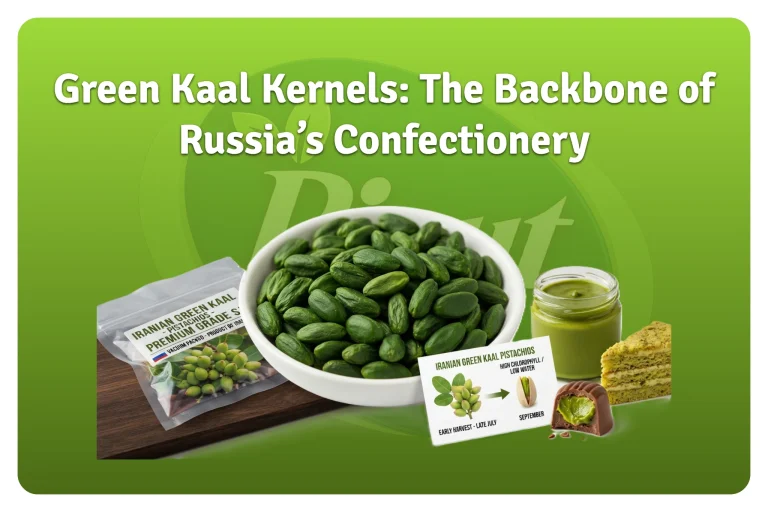
Green Kaal Kernels: The Backbone of Russia’s Confectionery
Table of Contents
Key Takeaways
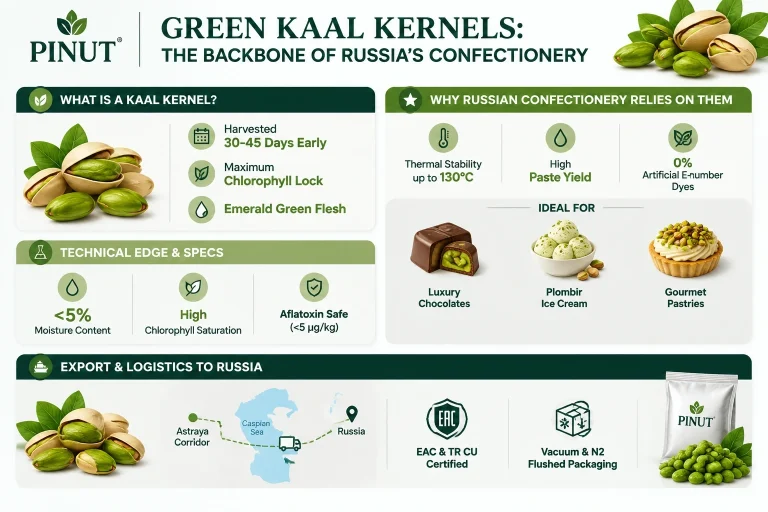
- What are Green Kaal Kernels? Early-harvested Iranian pistachio kernels picked in mid-to-late summer before full maturity to preserve an intense emerald-green color, firm texture, and concentrated nutty aroma.
- Why Russian Confectionery Relies on Them: Russia’s bakery, premium chocolate, ice cream (plombir), and gourmet halva industries require natural green coloring and high thermal stability without artificial dyes (E-numbers), making Kaal kernels the industrial gold standard.
- Economic & Formulation Edge: Due to minimal chlorophyll degradation and low moisture content (<5%), Kaal kernels maintain structural integrity during baking, conching, and industrial paste production.
- Logistics & Trade Standards: Sourced directly through reliable iranian pistachio export corridors via the Caspian Sea or Astara overland routes, certified under strict Eurasian Economic Union (EAC) phytosanitary standards.
The Secret Behind Russia’s Premium Sweets
The confectionery and bakery manufacturing sector in the Russian Federation represents one of the most sophisticated markets in the Eurasian Economic Union (EAEU). From heritage chocolate manufacturers in Moscow and Saint Petersburg to artisanal pastry chains and regional ice cream makers across the Urals, industrial recipe developers face an evolving consumer demand: clean-label formulations featuring intense, natural pigmentation.
In this demanding B2B ecosystem, standard commercial nuts often fall short. Ripe pistachios, while flavorful, naturally develop yellowish-green or purplish hues that fade when exposed to industrial heat, grinding, or aeration. The solution powering Russia’s luxury pastry, chocolate pralines, and premium fillings is the Kaal pistachio kernel (often classified globally as early-harvest or green peeled pistachio kernels).
Sourced from the mineral-dense orchards of Kerman and Rafsanjan, this specialized iranian pistachio format acts as the foundational backbone for confectionery manufacturers who refuse to compromise on visual vibrancy, flavor profile, or international safety compliance.
What is a Kaal Pistachio Kernel? Origin and Harvesting Science
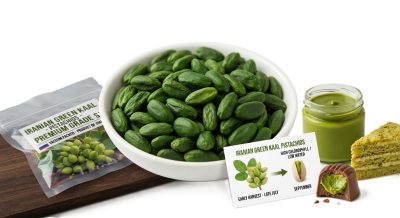
A kaal Pistachio refers to a nut harvested approximately 30 to 45 days prior to standard physiological ripeness. In Iran’s prime growing regions, this selective harvest takes place between late July and mid-August.
Immature Nut (Late July) –> High Chlorophyll / Low Water –> Green Kaal Kernel
Standard Nut (September) –> High Fat / Split Shell –> Yellow/Green Table Nut
When pistachios ripen completely on the tree, the natural shell splits (khandan), exposure to sunlight increases fat accumulation, and chlorophyll naturally transitions into lutein and carotenoids—turning the inner nut yellow or pale green. By picking the raw nut early while the outer shell remains tightly closed and uncalcified:
- Chlorophyll Synthesis is Locked: The kernel captures its highest possible chlorophyll saturation, delivering a deep emerald green that penetrates through the entire nut flesh.
- Moisture & Texture are Optimized: Immature kernels exhibit a dense, crisp cellular structure with minimal water retention, ideal for cold-storage stability and industrial cutting.
- Purity & Aflatoxin Resistance: Because the early protective hull is completely intact and unopened, Kaal kernels have near-zero baseline exposure to airborne spores and environmental contaminants, streamlining EAC compliance.
For buyers choosing unprocessed whole nuts over value-added ingredients, exploring differences across pistachio types shows why kernel-stage selection directly shapes finished-product aesthetics.
Why Russia’s Confectionery Industry Prioritizes Iranian Kaal Kernels
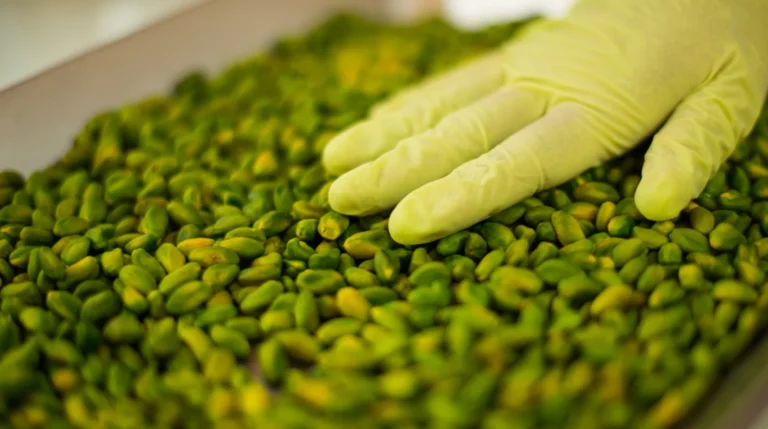
Russian food processors, bulk distributors, and contract confectioners rely on early-harvest Iranian kernels for distinct technical and commercial advantages:
1. Thermal and Color Stability During Industrial Processing
Whether temper-blended into white chocolate bars, baked into layered wafer tortes, or processed into smooth fillings, ingredients undergo extreme shear and heat stress. While artificial food colorings face strict regulatory scrutiny and consumer pushback under Russian TR CU regulations, the natural chlorophyll in a Kaal pistachio kernel retains its radiant color under temperatures exceeding 130°C without oxidizing into a dull brown.
2. High-Yield Extraction for Pastes and Fillings
Confectioners producing artisanal fillings and gelato bases turn raw kernels into velvety pastes. Sourcing raw, premium kernels from an established iranian pistachio kernel line ensures higher yield per metric ton. When processed into pure pistachio paste, Kaal kernels yield an intense, naturally verdant emulsion without requiring supplementary pistachio oil or stabilizing food colorants.
3. Ideal Texture for Chopped Toppings and Inclusions
In traditional Russian bakeries, visual contrast is paramount. Chopped (krokant), slivered, or diced Kaal kernels retain structural crunch even when folded into moist doughs or dairy mousses. They do not turn soggy quickly, maintaining clean surface lines on frosted cakes, glazed éclairs, and luxury chocolate truffles.
Technical Comparison: Kaal Kernels vs. Fully Matured Kernels for Industrial Use
Selecting the correct grade determines both factory floor efficiency and final margins. Russian food technologist teams evaluate procurement based on specific performance criteria:
| Parameter | Green Kaal Pistachio Kernel | Fully Matured Pistachio Kernel |
|---|---|---|
| Harvest Window | Late July – Mid August | September – October |
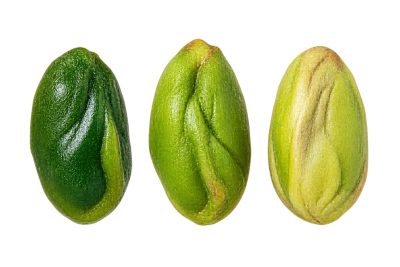
| Dominant Kernel Color | Emerald Green (Grades S, A, B) | Yellowish-Green with Purple Pellicle |
| Chlorophyll Density | Maximum (Uniform throughout) | Moderate to Low |
| Moisture Content | 4.0% – 5.5% (Post-drying) | 5.0% – 6.5% |
| Fat/Oil Ratio | Moderate (~48–51%) | High (~54–57%) |
| Primary Industrial Use | Luxury Confectionery, Gelato, Pastry | Snacking, Mass Bakery, Budget Halva |
| Thermal Color Retention | Superior (Resists browning) | Prone to darkening under high heat |
| Price Tier | Premium / Specialized Grade | Economical / Standard Volume |
Sourcing, Logistics & EAC Customs Compliance for the Russian Market
Importing industrial nuts into the Russian Federation requires strict adherence to technical regulations enforced by the Eurasian Economic Commission and Rosselkhoznadzor. Successful procurement hinges on executing trade documentation correctly:
- Technical Regulation Compliance: Bulk kernel consignments must satisfy TR CU 021/2011 (On Food Safety) and TR CU 029/2012 (Safety of Food Additives, Flavorings, and Processing Aids). An official Declaration of Conformity (EAC) is mandatory before entry clearance.
- Phytosanitary & Aflatoxin Verification: Every export container requires a validated Phytosanitary Certificate from the Iranian National Plant Protection Organization. Shipments are strictly screened to confirm total aflatoxin levels fall within EAEU threshold limitations.
- Packaging Architecture for Quality Preservation: Because early-harvest kernels are sensitive to light and moisture absorption during sea or rail transit, they must be vacuum-packed in aluminum foil bags (10 kg to 12.5 kg) within sturdy corrugated master cartons, flushed with nitrogen to prevent rancidity.
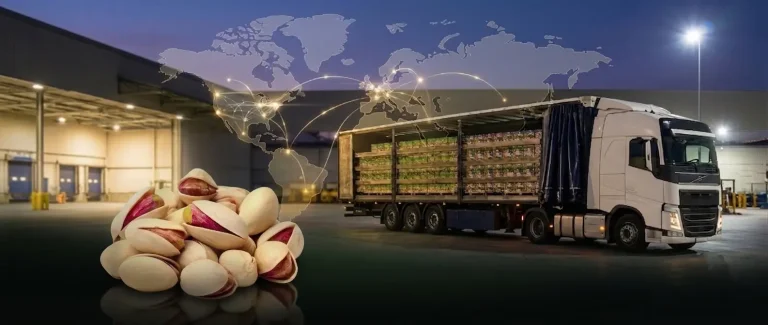
- Corridor Logistics: Direct shipments move swiftly through North-South transport arteries—either departing northern Iranian ports across the Caspian Sea to Astrakhan, or traversing the Astara-Baku overland corridor directly into Moscow and Saint Petersburg logistics terminals.
For companies evaluating comprehensive container volumes, cross-referencing our dedicated guide on Iranian pistachios for the Russian market and regional procurement options like Fandoghi pistachio for Russia provides a clear comparative roadmap between snack-market in-shell nuts and industrial kernels.
Conclusion: Securing Your Confectionery Supply Chain with Pinut
In the competitive landscape of Russian confectionery manufacturing, ingredient purity dictates market share. Green Kaal kernels deliver the indispensable natural color, authentic aroma, and stable performance required to create signature chocolates, bakery delicacies, and premium pastes. By eliminating the need for artificial food dyes while elevating visual appeal, early-harvest kernels allow brands to command premium shelf prices across Russian supermarket chains and gourmet retail outlets.
At Pinut, we operate directly from the agricultural heartland of Rafsanjan, managing every phase of production—from early hand-harvesting and gentle mechanical shelling to optical laser color-sorting and vacuum export packaging.
Explore our full inventory of industrial raw ingredients across our official products page, or speak directly with our specialized trade desk to request specification sheets, laboratory COAs, and current FOB/CIF quotations via our contact us portal.
