
Blog
Storage tips for pistachios
For B2B buyers, food wholesalers, and importers, maintaining the integrity of inventory is critical to profitability. Knowing how to tell if pistachios have gone bad is not just about taste—it is about food safety, shelf-life management, and protecting your brand’s reputation. Whether you are dealing with Iranian pistachios or other origins, identifying the early signs of spoilage is a vital skill for any procurement team.
Signs Pistachios Have Gone Bad
Pistachios are rich in healthy fats, but these same oils make them susceptible to oxidation. To ensure you are delivering high-quality products, monitor your stock for these three primary indicators of spoilage.
1. Unpleasant Rancid Odors
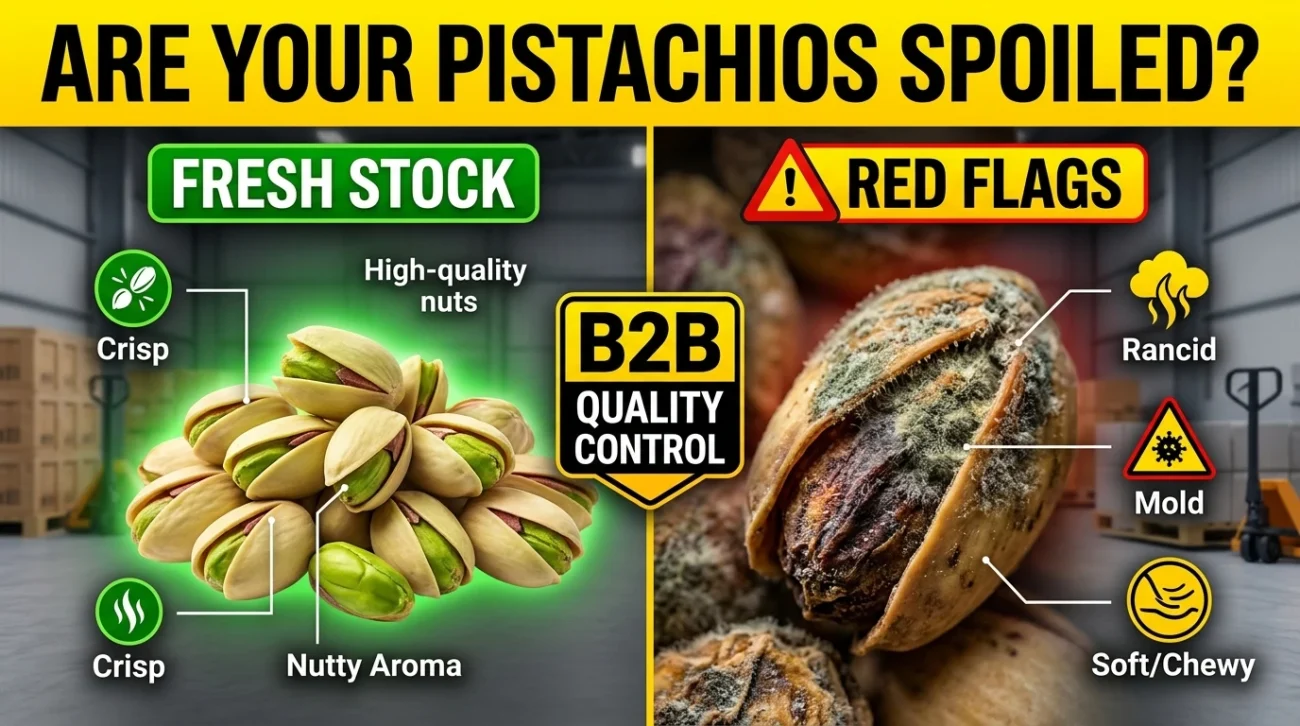
Fresh pistachios have a mild, nutty, and slightly sweet aroma. If a bulk shipment emits a sharp, sour, or “paint-like” smell, the fats have likely oxidized. Rancidity is a clear sign that the product has passed its peak and should not be distributed.
2. Visual Defects and Mold
Visual inspections are the first line of defense in quality control. Look for:
- Mold Growth: Any fuzzy white, green, or dark spots indicate moisture infiltration. Mold can lead to aflatoxin contamination, a serious concern in the Iranian pistachio trade.
- Discoloration: While kernels vary in color, a dark brown or completely black appearance usually suggests the nut is “dead” or rotten.
- Pest Damage: Small holes or powdery residue (frass) indicate an infestation, which compromises the entire batch.
3. Stale Texture and Taste
When you compare different pistachio types, such as Akbari vs. Ahmad Aghaei, you expect a crisp, firm “snap” when bitten. If the nuts are soft, rubbery, or chewy, they have absorbed excess moisture. A bitter or soapy taste is a final confirmation of rancidity.
Why Do Bulk Pistachios Spoil?
Understanding the “why” helps in refining your services and logistics. Three main factors contribute to degradation:
- High Temperatures: Heat accelerates chemical reactions that lead to rancidity.
- Excess Moisture: Humidity is the primary cause of mold and textural loss.
- Oxygen Exposure: Constant airflow strips away freshness, particularly for processed goods like pistachio paste or pistachio kernels.
Wholesale Pistachio Storage Tips
To maximize the health benefits and shelf life of your inventory, follow these industry-standard storage protocols:
- Climate Control: Store bulk pistachios in a cool, dry environment. Ideally, temperatures should be kept between 0∘C and 5∘C (32∘F to 41∘F) for long-term storage.
- Humidity Management: Maintain a relative humidity (RH) of 55% to 65%. This prevents the nuts from becoming brittle or developing mold.
- Airtight Packaging: Use vacuum-sealed bags or nitrogen-flushed packaging to minimize oxygen contact. This is especially important for high-value items like Jumbo Pistachio (Kallehghouchi).
- Odor Isolation: Pistachios are porous and absorb surrounding smells. Store them away from pungent items like onions, garlic, or chemicals.
Securing Your Global Supply Chain
Identifying spoilage is a reactive measure; the best proactive strategy is partnering with a reliable supplier. At Pinut, we specialize in the export of premium Iranian round pistachios and kernels, ensuring every shipment meets rigorous quality standards before it leaves our facility.
By implementing strict storage standards and knowing how to tell if pistachios have gone bad, you protect your investment and ensure your customers enjoy the premium quality they expect.
Need to replenish your stock with fresh, high-quality pistachios?
Contact us today for bulk quotes, custom packaging options, and logistics support tailored to your region.
