

Blog
How to Store Pistachios for Maximum Freshness
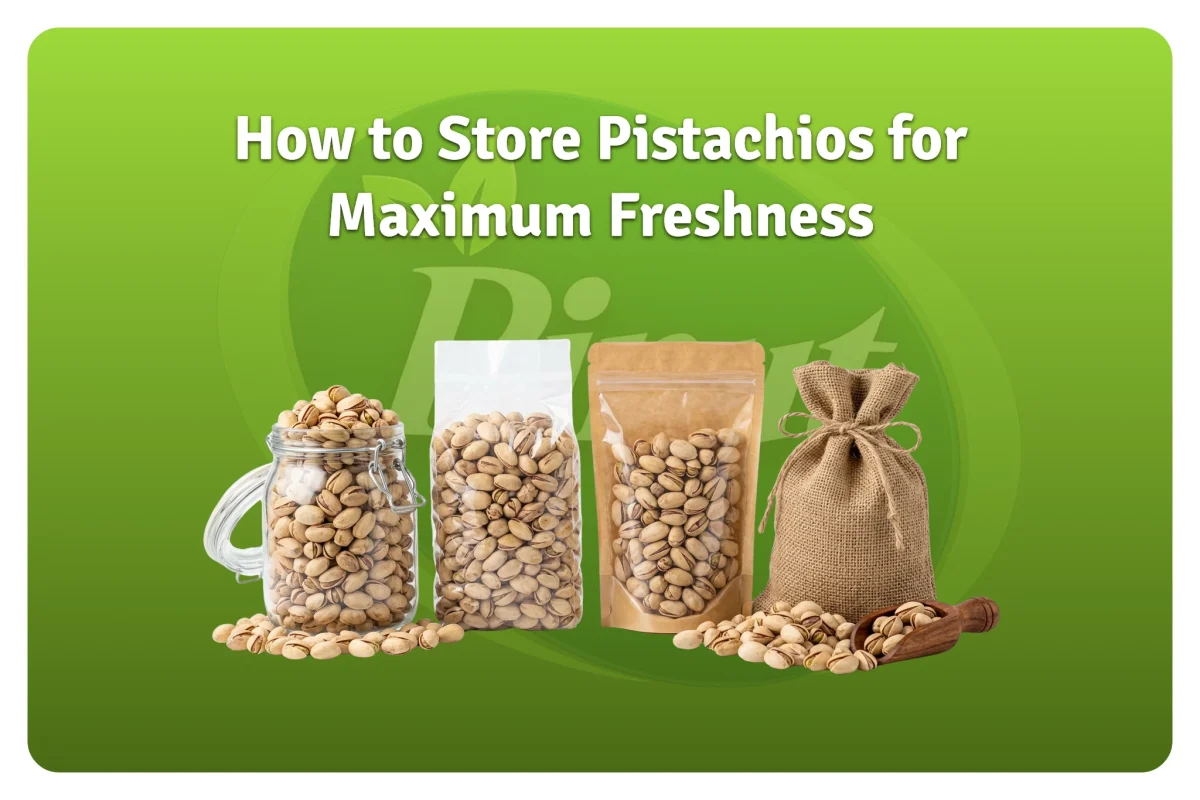
The best way to store pistachios is in sealed, airtight packaging. Keep them protected from heat, moisture, direct light, and strong odors. Therefore, maintaining a cool, dark, and pest-free environment prevents premature rancidity. This ensures maximum product integrity for your customers.
Why Proper Storage Matters
Pistachios are a high-value agricultural product. Proper storage preserves the crispness that defines premium nuts.
When exposed to heat, fats oxidize. This leads to rancidity and a compromised texture. Furthermore, high humidity increases moisture absorption. This may trigger mold growth or loss of crunch. For wholesalers, strict storage protocols protect your brand reputation. They also safeguard your inventory value.
Step-by-Step Storage Approach
Follow these steps to minimize quality loss:
- Inspect Upon Receipt: First, check packaging for integrity and seal failures.
- Use Appropriate Packaging: Transfer product to food-grade containers if needed.
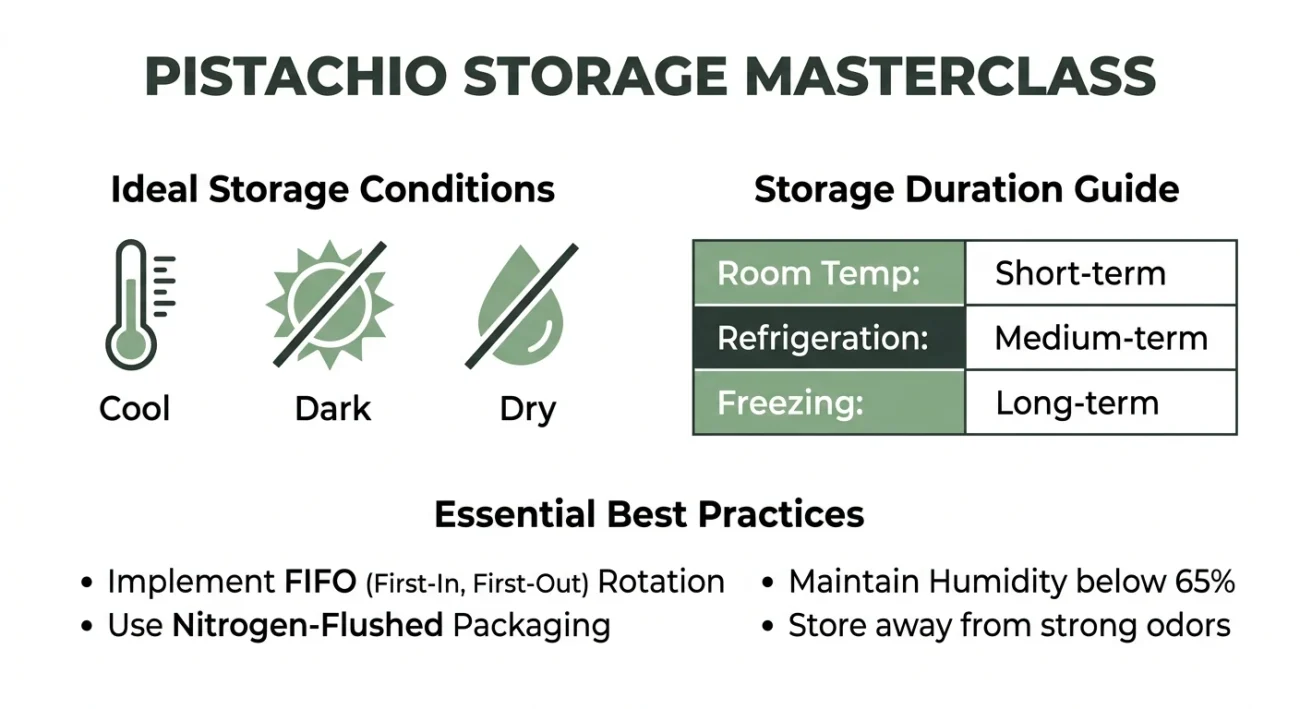
- Control the Environment: Store in a cool, dry, and dark location.
- Isolate from Odors: Keep inventory far from chemicals or spices.
- Rotate Stock: Implement a strict FIFO system. This ensures older inventory ships first.
- Monitor Quality: Conduct routine checks. If you notice degradation, learn how to tell if pistachios have gone bad to determine usability.
Storage by Pistachio Type
Storage needs often depend on the specific product format. For instance, pistachio types vary in their sensitivity.
- In-Shell vs. Shelled: In-shell nuts naturally last longer. Conversely, an exposed Iranian pistachio kernel requires strict moisture control to avoid staleness.
- Raw vs. Roasted: The roasting process alters oil structures. Understanding the difference between raw vs. roasted pistachios is vital, as roasted varieties generally spoil faster at room temperature.
Storage Methods Compared
| Storage Method | Best For | Key Considerations |
|---|---|---|
| Room Temperature | Short-term turnover | Must be cool, dark, and dry. |
| Refrigeration | Medium-term storage | Requires moisture-proof sealing. |
| Freezing | Long-term inventory | Avoid temperature fluctuations. |
Warehouse Storage Best Practices
For bulk buyers, consistent warehouse conditions ensure quality.
- Temperature Stability: Maintain a consistent, cool climate. Avoid heat sources.
- Moisture Protection: Elevate cartons off the floor using pallets.
- Pest Prevention: Implement regular pest-control procedures.
- Oxygen Barrier: Utilize nitrogen-flushed packaging for long-term storage.
Conclusion
Protecting your bulk inventory requires a professional plan and attention to detail. By investing in proper environmental controls, you secure a legacy of quality for your brand. Ultimately, professional planning guarantees the premium product your clients expect.
Ready to elevate your bulk procurement strategy? Contact us today to schedule a consultation and discuss your specific inventory needs.
